





Introduction
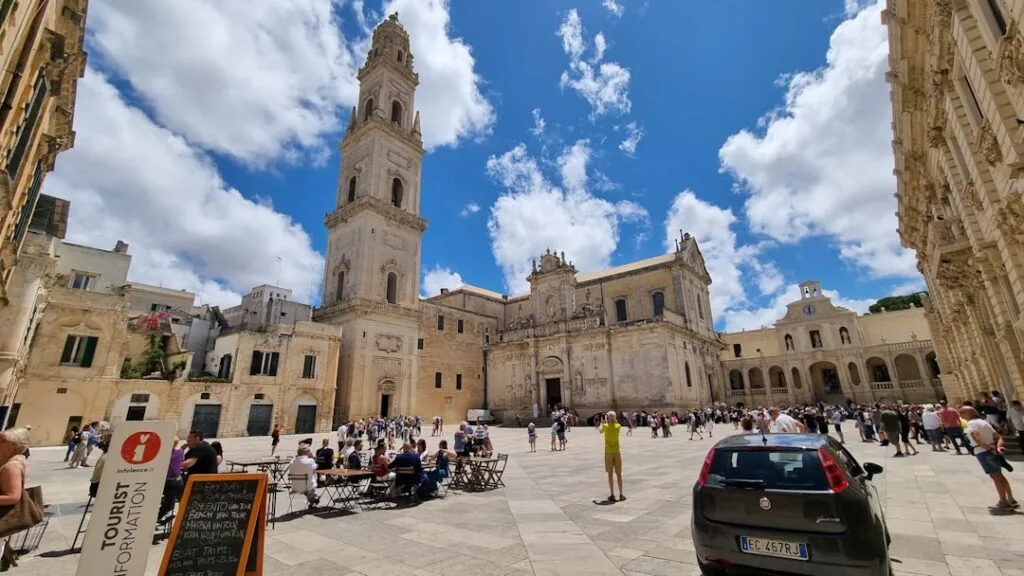
Lecce, nicknamed the “Florence of the South,” is a city where the stone speaks. Away from Italy’s largest metropolises, the capital of Puglia stages a fascinating conversation between late Baroque flourish and medieval echoes, especially visible in its religious facades. These frontages — carved from local chalky limestone, the famous pietra leccese — form a sculptural lexicon where angels, sea monsters, laughing putti and vegetal motifs mix to tell the spiritual and civic story of a city that used stonework to assert its identity.
This piece aims to guide you through the most beautiful religious facades in Lecce. We go beyond a simple list: each monument is placed in its urban, architectural and liturgical context, with practical details to make your visit easier (exact addresses, opening hours, admission fees, photo tips and local recommendations). Whether you’re an amateur photographer hunting for the best light, a curious traveler eager to decode Baroque symbolism, or a pilgrim seeking a quiet moment, you’ll find immersive, useful information here.
What makes Lecce unique is how its religious facades engage with the street: they don’t merely enclose a sacred space, they open it to the world, inviting spectacle and reflection. The art of ornamentation goes hand in hand with popular devotion, and every portal becomes a stage where Baroque drama unfolds. As you wander the historic center, take time to look up: from ornate lintels to twisted columns, overloaded pediments to subtle rosettes, every detail rewards a careful eye.
We’ve selected emblematic facades, favoring monuments that are publicly accessible and meaningful either for their history or their state of conservation. For each one you’ll find a detailed description, the exact address, opening hours and ticket prices where applicable, plus practical advice (best times for photos, logical visit combinations, transport access, and recommended cafes or restoration workshops nearby). Image markers will help you visualize scenes and inspire your own photo story or travel journal.
One last travel tip before we dive in: wear comfortable shoes. The historic center is a maze of cobbled lanes best explored on foot; every corner promises an even more surprising facade. Bring a small headlamp if you plan to visit crypts or dim chapels, and a notebook to jot down the details that move you — in a city where stone sings, it’s good to listen and write.
Basilica di Santa Croce — Piazza Santa Croce, 73100 Lecce LE, Italy
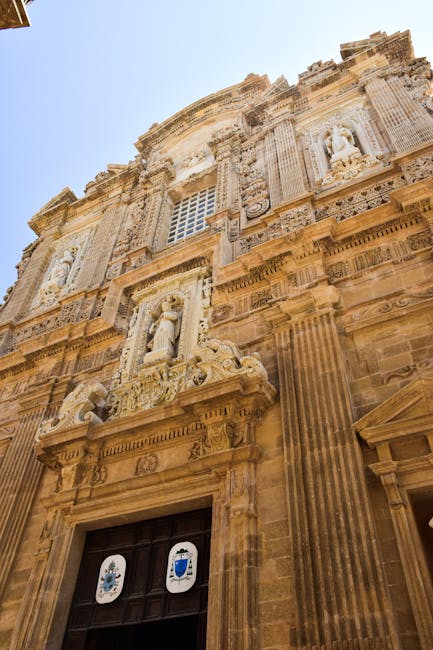
The Basilica di Santa Croce is often regarded as the crowning achievement of Lecce Baroque. Its richly ornamented facade reads like a sculptural manifesto: heraldic lions, grotesque masks, musical angels, vegetal garlands and intertwined rosettes create a lively surface that captures the light at every hour. The balance between decorative exuberance and architectural order makes this facade an essential study for fans of ornament and art history.
Address: Basilica di Santa Croce, Piazza Santa Croce, 73100 Lecce LE, Italy.
Opening hours: typically 9:00–13:00 and 16:00–20:00; in high season (April–October) these times can extend to 21:00. Check before you go, as religious services may affect access.
Admission: free entry to the main church; guided visits to the crypt and sacristy around €3–5 (depending on season and local arrangements).
Immersive description: as you approach the square, you’ll first perceive the overall effect — a richly packed facade that still breathes thanks to its columns and niches. The main portal, flanked by Solomonic columns, supports a finely carved balcony lined with allegorical figures. The sculptures weren’t conceived just for the eye: they speak to the city — each motif recounts a biblical episode, a moral allegory, or a piece of local culture — for instance, nods to the region’s agricultural life cleverly integrated as fruits and bunches of grapes.
 Click here to explore Lecce’s Baroque architecture and undergrounds
Click here to discover Lecce’s Baroque secrets in 3 hours
Practical tips: for a perfect shot, aim for early morning (7:30–9:30) or dusk (18:30–20:30 in summer): the pietra leccese then takes on intense golden tones. Enter during mass time to feel the facade as the threshold of a living place — but be mindful of indoor photo restrictions. Don’t miss the sacristy and the crypt, often reachable with a small donation; they reveal decorative fragments and altarpieces less visible from the square.
Cattedrale di Maria Santissima Assunta (Duomo di Lecce) — Piazza del Duomo, 73100 Lecce LE, Italy
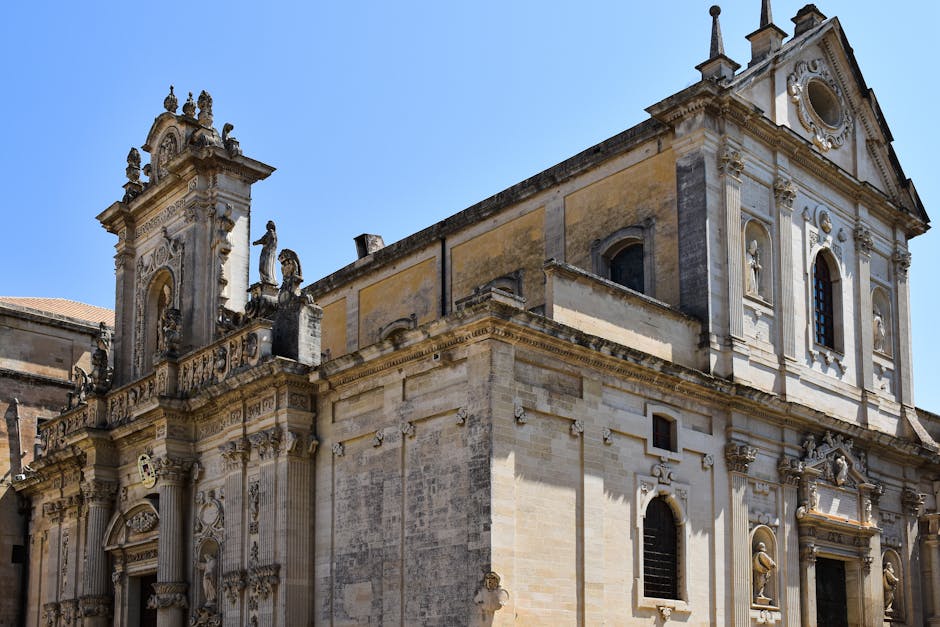
Lecce’s cathedral, consecrated to Saint Mary of the Assumption, stands at the heart of an episcopal ensemble that includes the bell tower (campanile), the bishop’s palace and the atmospheric Piazza del Duomo. The facade, less flamboyant than Santa Croce but soberly monumental, demonstrates the local Baroque’s ability to vary its tone: here the stone becomes monumental, the decoration is more architectural, proportions breathe, and the monumentality converses with the square.
Address: Cattedrale di Maria Santissima Assunta, Piazza del Duomo, 73100 Lecce LE, Italy.
Opening hours: typically 8:00–12:30 and 16:30–20:00 (times vary around masses and liturgical feasts). The campanile is sometimes open and offers panoramic views over the cathedral roof and the historic center.
Admission: entry to the cathedral is free; access to the campanile and the diocesan museum may be ticketed (approx. €3–6 depending on services and temporary exhibitions).
Immersive description: crossing the square, the facade unfolds as a staged ensemble: a restrained entrance portico topped by a tympanum and a play of niches, while the nearby campanile punctuates the skyline. Inside, the naves, side chapels and gilded decoration create a luminous whole guiding the eye toward the choir and the crypt. The full experience is to combine admiring the facade with climbing the campanile to perceive the dialogue between sacred architecture and Lecce’s urban fabric.
Click here to book the audio guide and ticket for the diocesan museum
Practical tips: visit the cathedral in mid-morning to avoid tour groups and harsh low-angle light. If you’re up for it, climb the campanile — the view is worth the ticket and lets you take in the geometry of the stone roofs. For sacred art lovers, book a guided tour of the adjoining Museo Diocesano (Palazzo Vescovile), which houses liturgical treasures and historical documents.
Chiesa di San Matteo — Piazza San Matteo, 73100 Lecce LE, Italy
The Church of San Matteo, tucked on the peaceful Piazza San Matteo, is a small marvel of sculptural finesse. Less famous than Santa Croce or the Duomo, its facade offers an intimate reading of the Baroque: filigree details, little putti, and a tympanum worked with an almost Rococo delicacy. The more compact frontage invites close inspection: every relief tells a story, a symbol, a local devotion.
Address: Chiesa di San Matteo, Piazza San Matteo, 73100 Lecce LE, Italy.
Opening hours: often 10:00–12:30 and 17:00–19:30; times may vary with parish celebrations.
Admission: generally free, though donations or collections are common for upkeep.
Immersive description: approaching San Matteo you feel the shift from monumental scale to a human one. The stone shows traces of restoration: patinated areas sit alongside cleaned sections, offering an interesting contrast for photographers. The main portal, typically framed by two decorated columns, opens onto a modest yet richly adorned nave; side altars display local paintings and retables that testify to the parish’s vibrant devotional life.
Practical tips: San Matteo is perfect for a quiet, contemplative stop away from crowds. Sit in the square for a while, study the facade details up close and hunt for craftsmen’s marks: signatures, small mistakes, old repairs. In summer the interior’s coolness is a welcome respite; in winter, check mass times if you want to hear the parish choir — often emotionally stirring in this intimate setting.
Click here to explore offbeat Lecce, its alleys and stone lacework
Chiesa di Sant’Irene — Piazza Sant’Oronzo, 73100 Lecce LE, Italy
The Church of Sant’Irene, dedicated to Lecce’s patron saint, occupies a symbolic spot in the city’s collective memory. Its facade, while simpler than some neighbors, stands out for a sober elegance and finely worked decorative elements that reveal a more restrained Baroque sensibility. Sant’Irene is often linked to local processions and religious festivals, giving its facade a living, ritual dimension.
Address: Chiesa di Sant’Irene, Piazza Sant’Oronzo, 73100 Lecce LE, Italy.
Opening hours: roughly 9:00–12:00 and 16:00–19:00; feast days and processions may alter access.
Admission: free entry; donations for upkeep are welcome.
Immersive description: Sant’Irene’s facade reads best in the context of the neighboring Piazza Sant’Oronzo, where markets and gatherings take place. The bas-reliefs and cornices, though less ostentatious, reward careful reading: maritime symbols (a nod to the region’s Adriatic ties), stylized crucifixions and vegetal motifs converse with the urban environment. Inside, paintings and pictorial cycles dedicated to the saint anchor the devotion of Lecce’s people in history.
Practical tips: visit Sant’Irene during a local feast (for example the patronal procession) to see the facade dressed with banners and special lighting. If you want a shot without people, the best time is early morning before nearby shops open. Also, talk to locals: short oral stories about the saint and the ex-votos often hung inside will greatly enrich your understanding of the place.
Click here to take a guided walking tour of Lecce
Oratorio dei Filippini (Oratorio di San Filippo Neri) — Via Umberto I, 73034 Lecce LE, Italy
The Oratory of the Filippini, dedicated to Saint Philip Neri, is a fascinating example of a more intimate religious architecture where a modest exterior coexists with rich interior decoration. Oratories in Lecce often play an important social role: they are lively places of assembly, prayer and devotion. This oratory is notable for its adorned side facades and small portals, ideal for detail photography.
Address: Oratorio dei Filippini (Oratorio di San Filippo Neri), Via Umberto I, 73034 Lecce LE, Italy.
Opening hours: often open in the afternoons for services or guided visits (15:30–19:00), but times vary widely; it’s best to call or check online before going.
Admission: free visit or suggested donation (€2–5); sometimes included in combined heritage tickets for city routes.
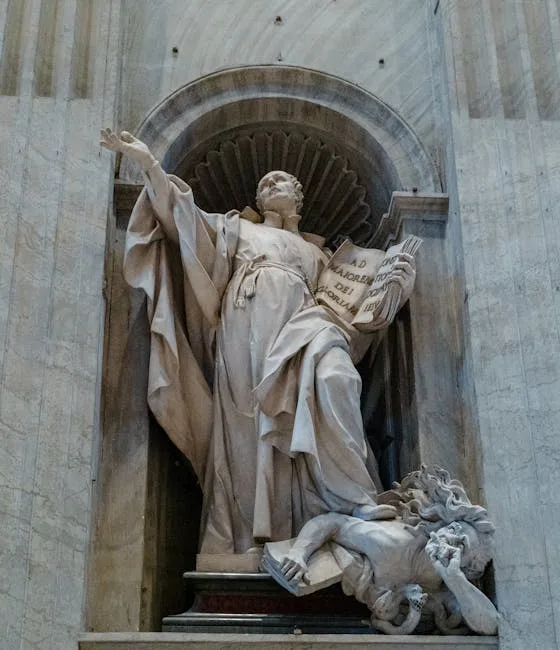
Immersive description: the modestly sized oratory charms with the intimacy of its decor. The main facade is restrained, but the rich Baroque ornamentation appears inside: polychrome stuccoes, small altars, frescoes and a delicate use of gilding. Oratories like this reflect an urban, communal Catholicism — often less ostentatious than grand basilicas but just as alive. For visitors, it’s a sensory experience: the scent of wax, light filtered through stained glass, and the muffled sound of footsteps on stone floors.
Click here to discover Lecce’s Baroque architectural treasures
Practical tips: the oratory is a perfect stop for a themed visit to Lecce’s “small devotion sites.” Combine it with a break at a nearby café to taste a pasticciotto (local pastry) and compare impressions. If you’re with a local guide, ask about the confraternities that used the oratory — their stories add human and social anecdotes to the architectural analysis.
Conclusion
Walking Lecce’s religious facades is accepting a long conversation with stone, history and devotion. Each facade tells not only an artistic moment — the local variation of Baroque — but also a story of communities, confraternities, successive restorations and liturgical uses. From the flamboyant Basilica di Santa Croce to the intimate quiet of the oratories, the range of architectural expressions reveals a city that blends monumentality with human proximity.
For travelers, a few simple rules will greatly improve the experience: favor early morning and dusk for the light, talk to locals to gather oral anecdotes, and take the time to step inside each building — often the surprise lies behind an unassuming door. Budget-wise, most churches are free to enter, but plan a few euros for guided tours, bell tower access or diocesan museums: those small expenses deepen understanding and offer unforgettable views.
Photographically, pietra leccese demands attention and respect: it shifts color with the hour and weather, from luminous ivory to deep ochre. A wide-angle lens will serve you well for monumental facades, while a 50–85 mm is perfect for capturing sculpted details. Finally, for visitors wanting to extend the experience, Lecce offers numerous restoration workshops and small galleries where you can watch artisans at work — a way to understand the gestures that created these facades and continue to preserve them.
In short, Lecce’s religious facades are an invitation: to read closely, to be surprised, to listen to the voices of the past and take part in the city’s present life. Whether you come for architecture, photography, spirituality or simply a stroll, Lecce will welcome you with its carved stones and warm sun — and you’ll leave with images and memories deeply rooted in the local rock.