





Introduction: Discovering Lecce’s Baroque on Foot
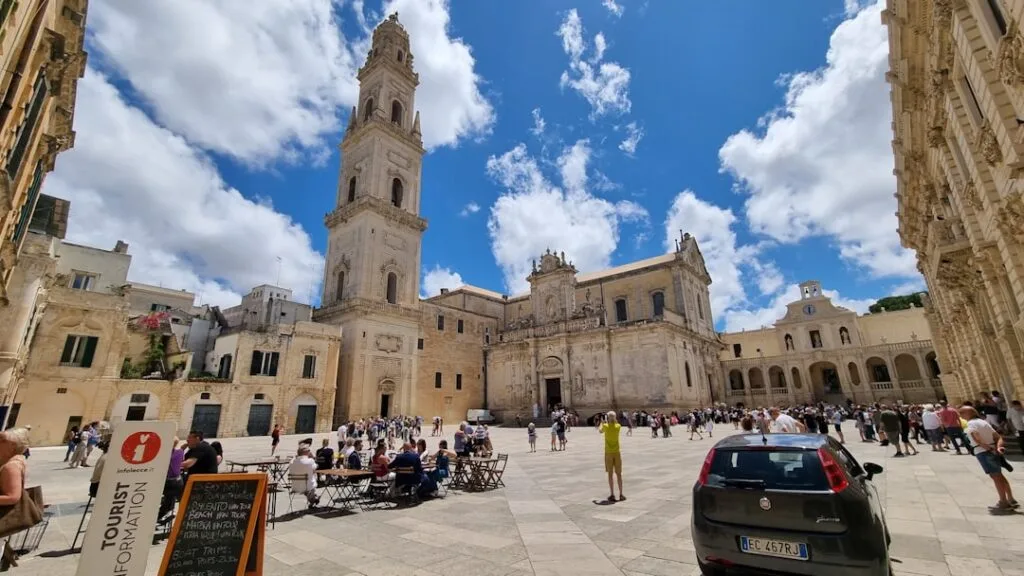
Lecce, the jewel of the Salento in Puglia, is often nicknamed the “Florence of the South” for its extraordinary concentration of Baroque art. Unlike larger art capitals, Lecce is best explored on foot: its compact lanes, honey-colored stone façades and lively little squares create an intimate, sensory atmosphere that begs you to wander. This Baroque walking itinerary through the historic center will take you across centuries, from late Renaissance touches to the exuberant decorations of Leccese Baroque, passing Roman remains and everyday spots that still keep the city’s heart beating.
Walking in Lecce means touching the stone and hearing footsteps on the pietra leccese — a soft, workable limestone that allowed local craftsmen, the maestri scalpellini, to carve reliefs, cherubs, grotesques and vegetal garlands so typical of the city. Around every corner a façade tells a story: saints, rams, human heads, chubby putti, marine motifs and corner trompes. The route suggested here covers roughly 2.5–3.5 km of slow strolling, punctuated by interior visits, coffee breaks and food tips so you can taste Salento’s specialties.
A few practical tips before you go: aim for early morning (8:30–11:30) to catch the soft light that flatters the façades and avoid summer heat; wear comfortable shoes, as some cobbled lanes are uneven; if you plan to enter museums or climb towers, carry cash for small entrance fees (some local institutions don’t always take cards). Lastly, respect church service times if you want to visit interiors (some close briefly for Mass).
This article offers a step-by-step route with exact addresses, opening hours, indicative prices in euros, immersive descriptions and local pointers to help you get the most out of Lecce’s Baroque. Whether you’re an architecture buff, a pattern-seeking photographer or a curious traveler, this circuit is designed to bring you into the heart of Leccese Baroque in half a day or a full day, depending on your pace.
Step-by-step itinerary: Piazza Sant’Oronzo and the first Baroque sculptures
Start your discovery at Lecce’s liveliest square: Piazza Sant’Oronzo, the social hub and convergence point of the city. Address: Piazza Sant’Oronzo, 73100 Lecce LE, Italy. This wide space is dominated by the Column of Sant’Oronzo and the Anfiteatro Romano, remains that recall the city’s long history. The partially visible Roman amphitheatre in the square shows how Baroque grew on ancient foundations: Baroque sculpture and Roman fragments visually answer one another.
The morning atmosphere in the square is perfect for spotting sculpted details on surrounding façades: mascarons, volutes and biblical figures that prime your eye for the lush ornamentation you’ll see at every stop. Nearby, pause at the Palazzo dei Celestini, the prefecture seat, whose Baroque façade is a fine example of Lecce’s monumental civic fronts.
 Click here to book a baroque and underground architecture tour
Click here to discover Lecce’s baroque secrets in 3 hours
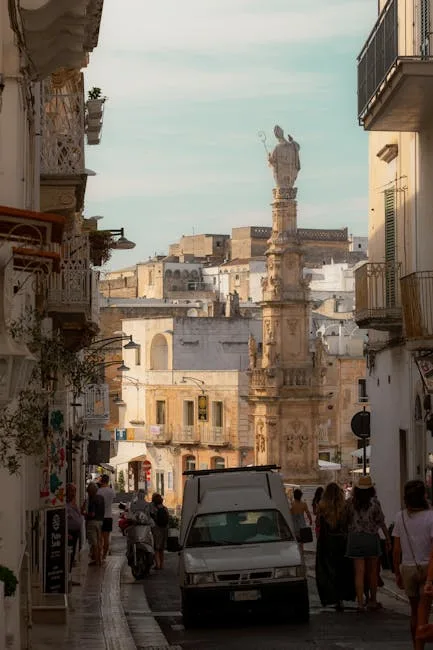
Practical hours and prices: the square is accessible 24/7. Access to the Anfiteatro Romano (Anfiteatro Romano di Lecce) from the square is free, though optional guided tours and info panels may be available during cultural events. Plan about 30–45 minutes for an initial exploration and to get your bearings. Local tip: enjoy a coffee at Caffè Alvino (Via 20 Settembre, 73100 Lecce, terrace seating) to watch daily life unfold; an espresso will be about €1.00–1.50.
- Photo tip: early morning side light on the Column of Sant’Oronzo is ideal for bringing out reliefs and textures.
- Access: the square is mostly pedestrian throughout the day; watch for taxis and delivery vehicles in the morning.
Basilica di Santa Croce and its sculptural details
A few minutes’ walk from Piazza Sant’Oronzo sits the undisputed star of Leccese Baroque: the Basilica di Santa Croce. Address: Piazza del Duomo / Piazza Basilica, 73100 Lecce LE, Italy. Built between the 14th and 17th centuries, the basilica is a manifesto of local Baroque, with an exceptionally worked façade where angels, religious figures, mermaids and vegetal motifs mingle in a profuse ornamental display.
Click here to explore Lecce’s baroque in 2 hours

Immersive description: move closer to the façade and let your eye follow the composition: the main doorway is flanked by twisted columns and ornate capitals, above which niches filled with statues and a large sculpted rose window open up. The local pietra leccese catches the western sun’s golden light, making the façade seem to change color during the day. Inside, the contrast is equally striking: delicately decorated vaults, richly adorned side chapels and an elaborately worked choir.
Opening hours (indicative, check before visiting): usually open Monday to Saturday from 9:00 to 13:00 and 15:30 to 19:30; Sunday visits may be possible outside Mass times (morning services). Fees: entry to the basilica nave is generally free, but a small contribution of €1–3 may be requested for maintenance and lighting; access to the cloister and attached museum can be charged (around €3–5). Recommended visit time: 45–75 minutes to appreciate both façade and interior.
- Practical tip: avoid visiting during services if you want photos without crowds.
- Accessibility: the church is partially accessible to visitors with reduced mobility; ask at the entrance.
Piazza del Duomo, Duomo di Lecce and the episcopal cloister
A stone’s throw from Santa Croce is one of the city’s most harmonious spaces: Piazza del Duomo. Address: Piazza Duomo, 73100 Lecce LE, Italy. This architectural ensemble includes the Duomo di Lecce (Cattedrale di Maria Santissima Assunta), the bishop’s residence, the bell tower and the episcopal palace, forming an elegant Baroque tableau. The Duomo, rebuilt in the 17th century, has a less extravagant façade than Santa Croce but displays refined sobriety, with an interior rich in altars and frescoes.
Immersive description: step into the cathedral to feel its scale and devotion: the vaults, stuccoes and gilding create a solemn liturgical atmosphere. If the bell tower (Torre Campanaria) is open, climb it: from the top you’ll take in the rooftops of the old town and the Baroque silhouettes of surrounding churches. Behind the cathedral, the episcopal cloister offers unexpected calm, with a shaded courtyard, arches and ornamented columns.
Hours and prices: Duomo di Lecce is generally open from 8:30 to 12:30 and 16:30 to 19:00 (summer hours may be slightly extended). Access to the cathedral is free for most visitors, but the Museo e Cripta del Duomo (museum and crypt) has an approximate fee of €3–5. The climb to the bell tower, when allowed, costs about €2–4 and is sometimes included in a combined museum-duomo ticket. Visit time: 30–60 minutes inside, plus 30 minutes extra for the cloister and campanile.
- Local tip: visit the cathedral late in the afternoon to enjoy golden light filtering through the windows that highlights the gilding.
- Practical: some areas may be temporarily closed due to ceremonies — check at the desk to avoid surprises.
Click here to book a private walking tour with included tickets
Museo Faggiano, Chiesa di San Matteo and Baroque backstreets
After the grand squares, intentionally lose yourself in the side streets to discover the more intimate face of Leccese Baroque. Start at the Museo Faggiano, an extraordinary house-museum that documents the city’s multi-millennial history through archaeological layers uncovered in a private home. Address: Via Ascanio Grandi, 2, 73100 Lecce LE, Italy. The museum, run by a family, offers a moving experience: descending through the house you cross floors and structures dating to Roman, Byzantine, Norman and Baroque periods.
Hours and prices: typically open in high season from 10:00 to 19:00, entrance around €5–8 (reduced rates for students and seniors). Recommended duration: 30–45 minutes. Book online or arrive early: the museum is small and groups are limited.
Continue your stroll toward the Chiesa di San Matteo (Chiesa di San Matteo delle Scuole Pie), located on Via Vittorio Emanuele II / adjacent to the main central streets (exact address: Via Vittorio Emanuele II, 73100 Lecce LE). This small Baroque church offers finely worked altarpieces and stuccoes. Here Baroque reads at a human scale: private chapels, small-scale artworks and delicate ornamentation.
Click here to book the walking and underground tour with tasting

Wandering tips: explore the perpendicular streets — Via Palmieri and Via Giuseppe Libertini — where townhouse façades and carved portals reveal themselves. Notice small details: old door knockers, wrought-iron grilles, balconies covered in flowers. For a tasty break, look for a local rosticceria and try a frisa (dried bread soaked and seasoned) or a pasticciotto (local pastry); expect moderate prices: €1.50–3.50 per pastry.
- Suggestion: download an offline map of the historic center: lanes are narrow and mobile networks can be patchy.
- Note: some private portals bear historical plaques; politely ask permission if you want to enter inner courtyards visible from the street.
Castello di Carlo V, Piazza Sant’Oronzo by night and Salentine cuisine
Finish your route with a visit to the Castello di Carlo V, a massive fortress that recalls Lecce’s military and political role in the modern era. Address: Piazza Sant’Oronzo, 73100 Lecce LE, Italy (the castle borders Piazza Sant’Oronzo and is easy to spot). The castle, remodeled over centuries, now hosts exhibitions and cultural events; its austere walls contrast with the delicacy of Baroque churches.
Click here to book a tasting of typical Lecce wines
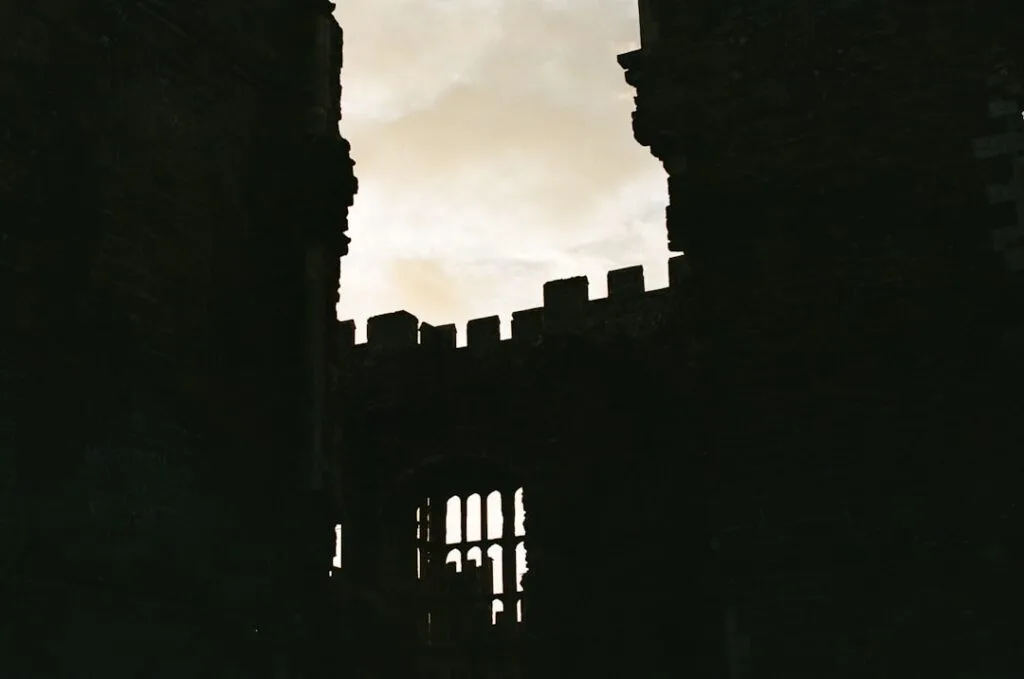
Hours and prices: access to the castle depends on current exhibitions; generally exterior spaces are free and exhibition fees vary (€3–8 depending on the event). Check the local calendar for guided visits or concerts in the courtyard; these events are great ways to experience Baroque through music.
After sunset, return to Piazza Sant’Oronzo or stroll nearby to soak up Italian nightlife. Wine bars (enoteche) and small trattorie serve generous Salentine cuisine: orecchiette alle cime di rapa (pasta with turnip greens), frisella, fried pittule and, naturally, fresh seafood. Recommended central eateries: La Cucina di Mamma (Via Palmieri 23, average main course €8–15) and Osteria degli Spiriti (Via Libertini 10, mains €10–18). For a drink, try an enoteca near Piazza Sant’Oronzo where a glass of local wine typically costs €3–6.
Evening tips: most restaurants start dinner service around 19:30; in high season, reserve ahead. Prices in the historic center are slightly higher than in outer neighborhoods. If you want a cultural activity after dinner, check for Baroque concerts or recitals in churches — a perfect way to end the day with music that matches the sculpted surroundings.
- Transport: the historic center is walkable; to reach the train station (Stazione di Lecce) allow 15–20 minutes on foot or €5–8 by taxi.
- Safety: Lecce is generally safe, but keep an eye on personal belongings in very touristy areas at night.
Practical summary information
– Allow 4–6 hours for this route if you plan to visit church interiors and Museo Faggiano; for a deeper version including museums and meal breaks, plan a full day.
– Opening hours (indicative, check official sites): Basilica di Santa Croce 9:00–13:00 / 15:30–19:30; Duomo di Lecce 8:30–12:30 / 16:30–19:00; Museo Faggiano 10:00–19:00; Castello di Carlo V hours vary with exhibitions.
– Prices (indicative): most squares and external façades are free; small contributions €1–5 for access to certain chapels, museums and the bell tower; larger museums and exhibitions €3–8.
– Key addresses: Piazza Sant’Oronzo, 73100 Lecce LE; Basilica di Santa Croce, Piazza Basilica, 73100 Lecce LE; Piazza Duomo, 73100 Lecce LE; Via Ascanio Grandi, 2 (Museo Faggiano), 73100 Lecce LE; Castello di Carlo V, Piazza Sant’Oronzo, 73100 Lecce LE.
Conclusion: Walk, feel and bring home Baroque details
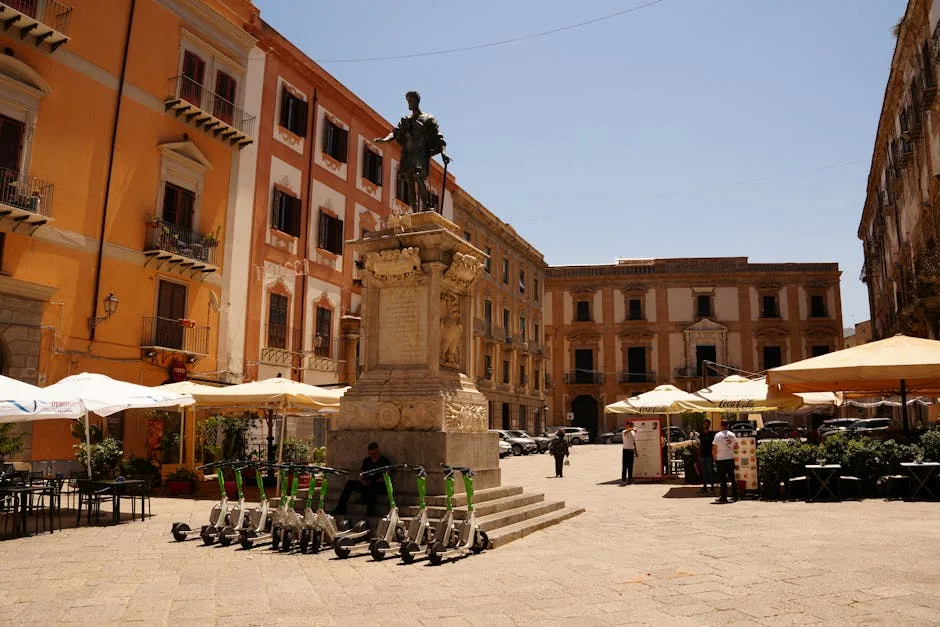
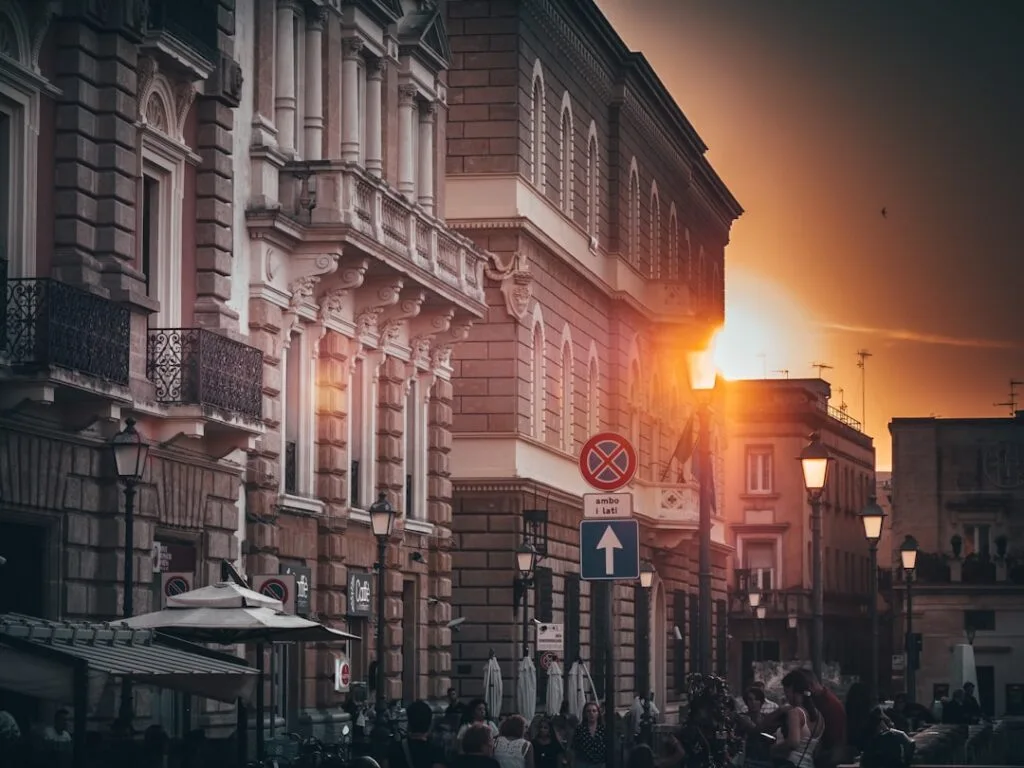
Lecce’s Baroque doesn’t just reveal itself through a list of monuments: it’s written in layers of stone, in the play of shadows across a frieze, in the way a balcony holds the light at dusk. Following this walking route you’ll pass key stylistic stages — from Roman remains at Piazza Sant’Oronzo to the sculptural abundance of Basilica di Santa Croce, through the liturgical interiors of the Duomo and the hidden treasures of Museo Faggiano. Each stop delivers a distinct sensation: the cathedral’s solemn grandeur, Santa Croce’s decorative frenzy, the cloister’s quiet and the Castello di Carlo V’s solidity. Together they form a unique visual and historical composition.
Final tips to make the most of it: leave unstructured time to get delightfully lost; the most memorable finds often lie off-map, in a discreet courtyard or tucked-away antique shop. Don’t hesitate to chat with a local craftsman or a café server: people from Lecce are often proud of their heritage and love sharing anecdotes and recommendations. Photographers will find the golden hours (just after sunrise and before sunset) ideal to highlight the pietra leccese; history lovers should consider a themed guided tour (often offered by local associations) to grasp the finer stylistic nuances of Leccese Baroque.
Finally, plan to return: Lecce rewards several short stays. The seasons change the city — spring and autumn bring pleasant temperatures and soft light, summer invites long evenings and fresh seafood dishes, winter reveals the stone in a graver light. Whatever the season, walking through Lecce’s Baroque remains a deeply sensory experience: you’ll leave not just with photos but with a real understanding of how a city can sculpt its identity in stone.