





Introduction
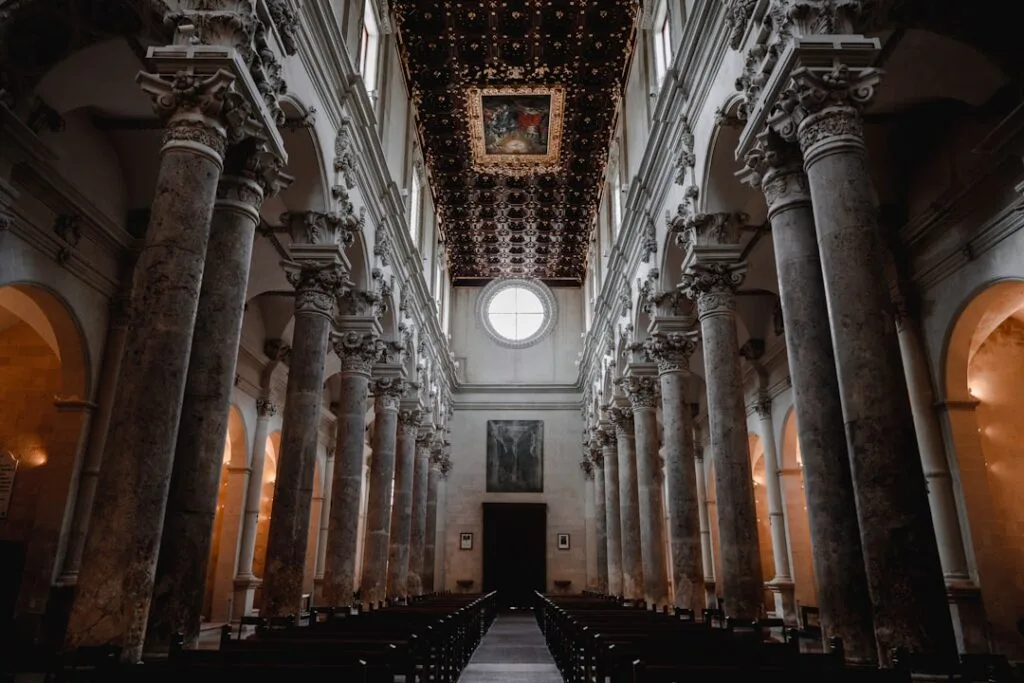
Photographing Lecce’s churches is like stepping into a living laboratory of late Baroque where stone and light tell centuries of stories. Nestled in the heart of the Salento in Puglia, Lecce is nicknamed the “Florence of the South”: its carved façades, slender bell towers and ornate interiors are an exceptional playground for the heritage-loving photographer. But to turn these settings into memorable images you need more than a good camera: you must understand the architecture, master the tricky light in transepts and side chapels, anticipate visiting hours, respect local rules and compose shots that tell a story.
This article is for both the amateur photographer wanting to know where and when to shoot and the professional seeking field tips: exact settings, lens choice, shooting angles, managing people and tricks to get sharp images without disturbing the sacredness of the spaces. We’ll review the emblematic churches — with addresses, hours, prices and immersive descriptions — then cover technical and practical advice to optimize your shooting in Lecce.
Throughout the paragraphs you’ll find concrete pointers: at what hour the Basilica di Santa Croce’s façade lights up at sunset; how to capture the verticality of the Cattedrale di Maria Santissima Assunta without distortion; which small details in the oratories and city chapels deserve a macro lens; and finally, how to obtain permission to photograph a church interior if you plan a professional shoot. We’ll also share recommended walking routes for an efficient shooting session, gear safety tips and ways to enjoy the best of Lecce without encroaching on worshippers’ quiet.
While respecting the heritage and the local community, you’ll learn to turn Lecce’s sculptural richness and luminous atmosphere into strong, timeless images. Ready to hit the road? Arm yourself with versatile lenses, a discreet tripod and sturdy shoes: Lecce is best told at the pace of your camera.
Understanding Leccese Baroque and how to use it in photos
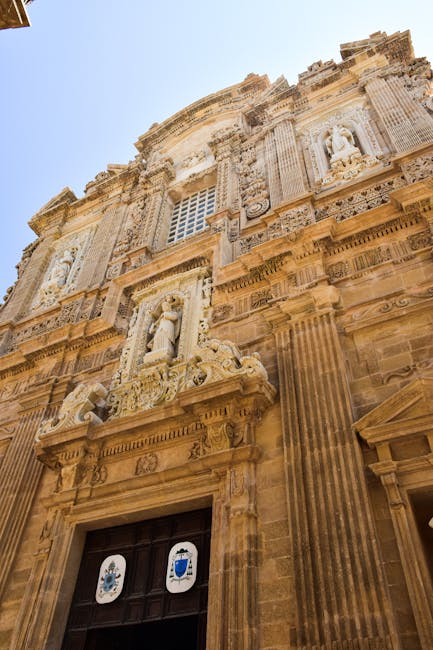
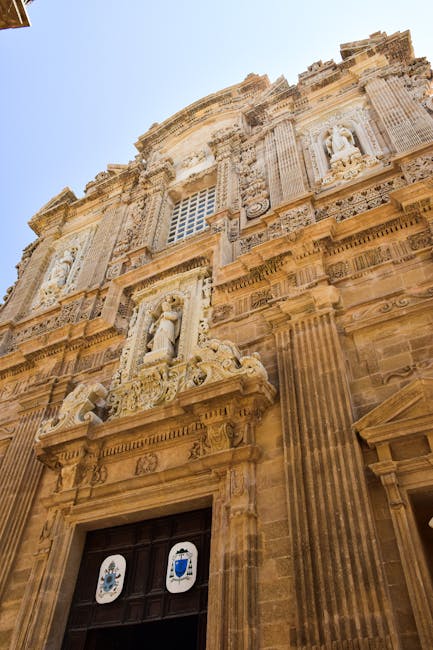
Leccese Baroque is a local variant of the Baroque that emerged in the 17th century, characterized by an abundance of carved motifs, cartouches, cherubs, acanthus leaves and mascarons. The local stone — pietra leccese, soft and warm — catches light differently depending on the hour, turning golden in the morning and orangey at dusk. Understanding this material and its interaction with natural light is essential to enhance details in your photos.
To exploit these characteristics: favor the golden hours (sunrise and sunset) for exterior façades. Contrasts are softer then and shadows bring bas-reliefs into relief without “burning” protruding parts. Indoors, incident light through stained glass and clerestory windows creates very contrasty exposure zones: shoot RAW and expose for highlights if you want to preserve the stone’s texture, or bracket exposures to merge captures (HDR) to retain detail both in shadows and bright areas.
Composition: play with repeating motifs (columns, pilasters, windows) using mid focal lengths (35–50 mm) to give depth, or a short telephoto (85–135 mm) to isolate sculptures and slightly compress perspective, revealing patterns the eye might miss. A wide-angle (16–24 mm) is useful to capture an entire nave or a narrow façade in an alley, but watch for vertical distortion: correct it in post or use a tilt-shift lens if you have one.
Respect the place: churches remain places of worship. Always ask permission at the entrance if you have a tripod or plan to use flash. In many buildings photography is allowed free for private use; some chapels and diocesan museums request a modest entrance fee. Avoid long poses and direct flash that disturb services or worshippers. Finally, keep quiet and shoot in short bursts to minimize your presence.
 Click here to explore Lecce’s baroque architecture and undergrounds
Must-see churches: names, addresses, hours, prices and immersive descriptions
1) Basilica di Santa Croce
Address: Piazza Santa Croce, 73100 Lecce LE, Italy.
Opening hours: generally 08:30–12:30 and 16:00–19:30 (varies by season); check locally for holidays.
Entrance fee: access to the church is free; guided tours or cloister access sometimes cost (approx. €3–5).
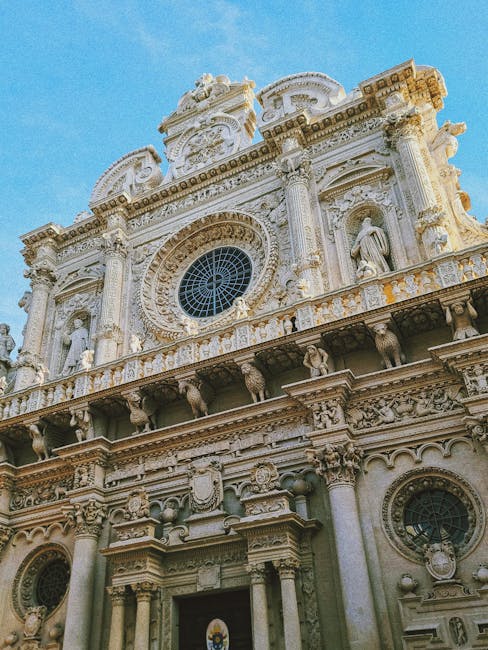
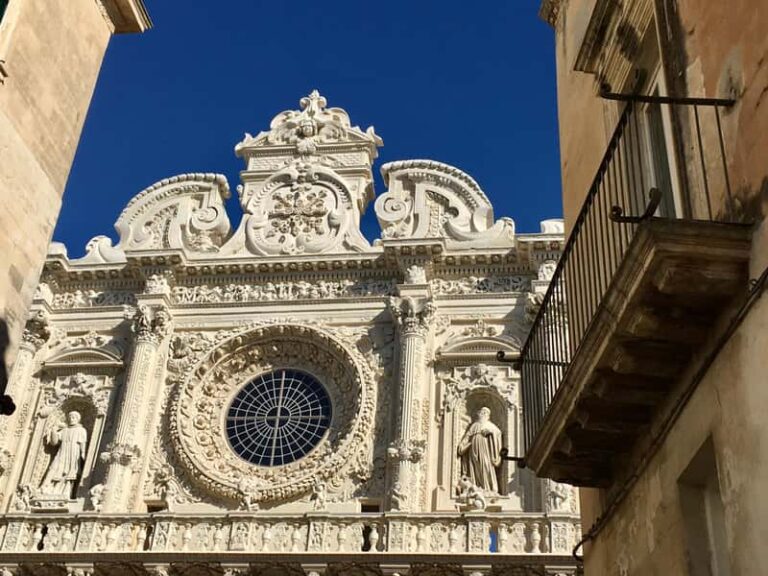
Description: the Basilica di Santa Croce is one of Lecce’s Baroque gems. Its façade overflows with floral carvings, angels and mascarons arranged in stacked registers. The fine stonework reads at multiple scales: volumes apparent from afar and details that reveal themselves up close. For photos, move in for tight shots of motifs, then step back at sunset to capture the whole façade bathed in warm light. Inside, the central nave and side chapels offer interesting shadow-and-light play. Less busy early mornings are the best times to photograph the façade with few tourists.
2) Cattedrale di Maria Santissima Assunta (Duomo di Lecce)
Address: Piazza del Duomo, 73100 Lecce LE, Italy.
Opening hours: 08:00–12:30 and 16:00–19:00; Saturday and Sunday hours vary with masses.
Entrance fee: cathedral access free; visit to the Museo Diocesano (if on site) €3–6.
Description: the Duomo has a restrained façade but a dome and bell tower soaring above the piazza del Duomo. The baroque interior, staged by the lighting of the chapels, frames compositions centered on the dome, stucco and frescoes. For a balanced shot of the nave, stand on axis, use a focal length between 24–35mm and stop down slightly (f/5.6–f/8) to preserve depth of field. The belvedere or terraces near the campanile offer panoramic views of the historic center, ideal at golden hour.
3) Chiesa di Sant’Irene
Address: Piazzetta Sant’Irene, adjacent to Piazza Duomo, 73100 Lecce LE, Italy.
Opening hours: often 09:00–12:00 and 16:00–19:00 (subject to variations for services).
Entrance fee: free access; donations appreciated (0–2 € suggested).
Description: close to the Duomo, Chiesa di Sant’Irene is more intimate and offers sculpted details that are less monumental but just as photogenic: painted altarpieces, baroque altars, woodwork and private chapels. It’s perfect for environmental portraiture and decorative detail work in low light. Use a controlled ISO (400–1600 depending on your body) and a compact tripod for discreet long exposures.
4) Chiesa di San Matteo
Address: Piazza San Matteo, 73100 Lecce LE, Italy.
Opening hours: 10:00–12:30 and 17:00–19:00 (variable with services).
Entrance fee: generally free; temporary exhibitions may charge (2–5 €).
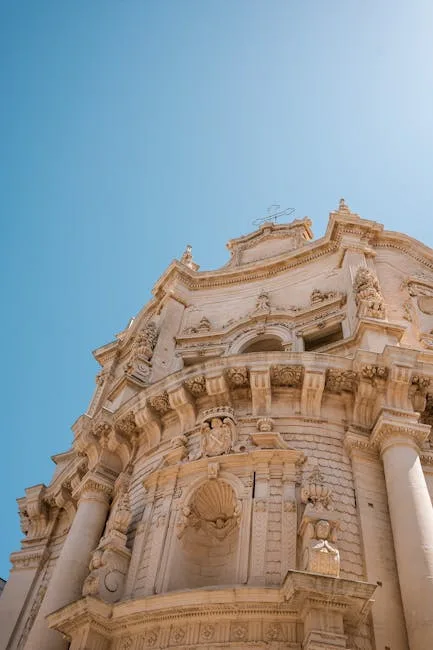
Description: San Matteo has a simpler plan but features intimate façades in the alleys that let you play with urban compositions: façades, signs, staircases and puddle reflections after rain. Ideal for contextual shots blending sacred architecture and city life. Look for morning backlight to silhouette the bell tower against a deep blue sky.
Click here to discover Lecce’s baroque secrets in 3 hours
Which on-site experiences will best enhance your shots?
The Santa Croce limestone blazes gold at sunset and the air carries a faint scent of incense that signals the perfect shooting time.
1. Private walking tour with tickets included
Private tour that skips lines and guarantees priority access to Santa Croce and the Duomo; the guide places you at the best viewpoints and manages access to ease timing constraints.
- ⏱️ Duration: 2 hours
- 🚩 Start: Under the large arch (historic center)
- 🎟️ Included: Skip-the-line tickets for Santa Croce and the cathedral
- 🗣️ Languages: Italian, French, English
- 👌 Ideal for: Photographers seeking priority access and framing spots
2. Photo tour/workshop
Hands-on 2-hour workshop focused on light and composition in real situations: guided shots, natural light tips, and delivery of 30 high-resolution files.
- ⏱️ Duration: 2 hours
- 🚩 Start: Porta Rudiae, entrance to the old town
- 🚶 Format: Walking workshop, on-location shooting
- 🗣️ Languages: Italian, Spanish, English
- 💡 Highlight: Light coaching and practical feedback during the shoot
Techniques and camera settings: practical tips for each situation
Recommended gear: a full-frame body is ideal for exposure latitude, but an APS-C or micro 4/3 will work well; bring a wide-angle (16–35mm) for interiors and narrow façades, a 24–70mm versatile zoom for most scenes and an 85–135mm to isolate sculptures. A lightweight discreet tripod (carbon legs if possible) is advised for long interior exposures; a built-in bubble level or an app to correct the horizon will help keep verticals straight.
General settings: shoot RAW to maximize dynamic range. For exterior golden hour, prefer f/8–f/11 for façade sharpness, ISO 100–200 and a shutter speed adjusted to light. Indoors, if a tripod is allowed, use f/5.6–f/8 to retain detail and set ISO based on exposure time (ISO 100–400 ideal for 1–2 seconds; above that, increase up to 1600 if needed). If a tripod isn’t possible, rely on strong image stabilization and fast lenses (f/1.8–f/2.8) to keep shutter speed up.
Specific techniques: for saturated highlights behind an altarpiece or stained glass, try exposure bracketing (3–5 stops) and HDR blending to retain detail. Vertical panoramas (stitching) let you capture an entire façade without excessive distortion if your lens is limited. To isolate textures, get close and use shallow depth of field (f/2.8–f/4): carved stone will pop, the background will blur, and the image will feel more intimate.
Practical post-processing tips: correct perspective distortions when needed (perspective correction tool), nudge clarity and texture to bring out carving, but avoid overdoing it for a natural look. For color, warm the tones slightly to convey the richness of pietra leccese; in black and white, stronger contrasts emphasize material and can be very effective for architectural details.
Click here to book your Lecce photography tour
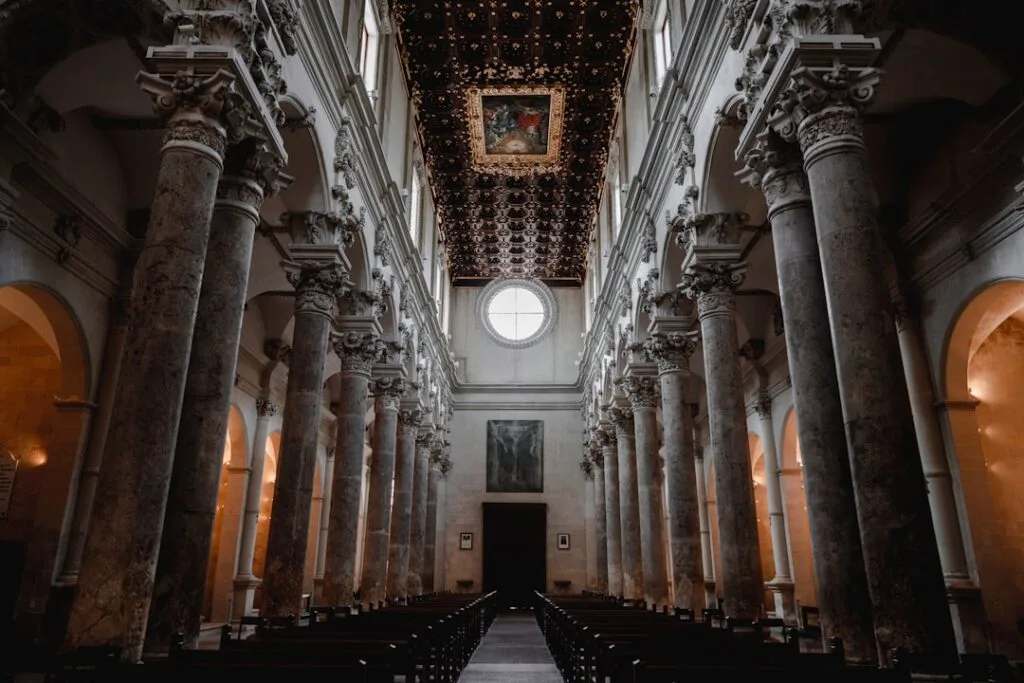
Photo routes, permissions, safety and local tips
Recommended routes: for a half-day session, start early at the Basilica di Santa Croce (Piazza Santa Croce) to catch sunrise on the façade, then walk to the Duomo (Piazza del Duomo) through the centro storico’s narrow lanes. Loop around to Chiesa di Sant’Irene (Piazzetta Sant’Irene) and Chiesa di San Matteo (Piazza San Matteo), saving late afternoon for details and backlighting. This compact circuit keeps walking short (all sites are within a 10–15 minute radius of each other) and lets you shoot in varying light.
Permissions and professional shoots: most churches allow private photography free or for a small donation. For professional shoots (crew, heavy gear, flashes, models), contact the parish or the Curia Vescovile (Diocese of Lecce) a few weeks in advance for written permission. The Museo Diocesano di Lecce, often adjacent to the Duomo, charges a separate entry fee (approx. 3–6 €) and sometimes imposes photo restrictions for valuable works.
Safety and local etiquette: Lecce is generally safe, but take standard precautions: keep your camera bag closed and close to you, don’t leave expensive gear unattended, and avoid deserted spots at night with visible equipment. Respect mass times and staff instructions; when in doubt, ask politely. The Lecchesi are usually welcoming and proud of their heritage; striking up a conversation can sometimes lead to special access or local stories that enrich your images.
Local practical tips: bring neutral density (ND) filters if you plan long exposures outdoors (fountains, quiet streets), a small LED torch to balance interior light sources for composites, and business cards or a brief portfolio if you want to request professional permissions. Check specific schedules during religious festivals (Santo Patrono, Holy Week); some churches close or change hours for ceremonies.
Conclusion
Shooting Lecce’s churches is both technical and sensory: you need to read the stone, listen to the light and respect the customs of an active place of worship. From the Basilica di Santa Croce (Piazza Santa Croce, 73100 Lecce LE) to the Cattedrale di Maria Santissima Assunta (Piazza del Duomo, 73100 Lecce LE), passing by Chiesa di Sant’Irene (Piazzetta Sant’Irene, 73100 Lecce LE) and Chiesa di San Matteo (Piazza San Matteo, 73100 Lecce LE), each stop offers unique patterns, textures and moods you can capture with minimal gear but plenty of observation.
Practically speaking, always check exact opening times (the hours here are typical ranges and may vary by season and festivities) and budget a little for small entries and donations (generally 0–6 €). Technically, shoot RAW, use bracketing and a discreet tripod when possible; vary focal lengths between wide views and sculpted details, and remember the emotional impact of a coherent series: telling Lecce’s story is not just photographing monuments but capturing the relationship between stone, light and urban life.
Finally, be respectful: ask permission for professional shoots, avoid flash during services and favor discretion. The Lecchesi appreciate visitors who value their heritage while honoring its sacredness. Combining technical prep, aesthetic curiosity and good manners will leave you with images that reflect not only exceptional architecture but a palpable atmosphere — warm, intimate and deeply baroque.