





Introduction
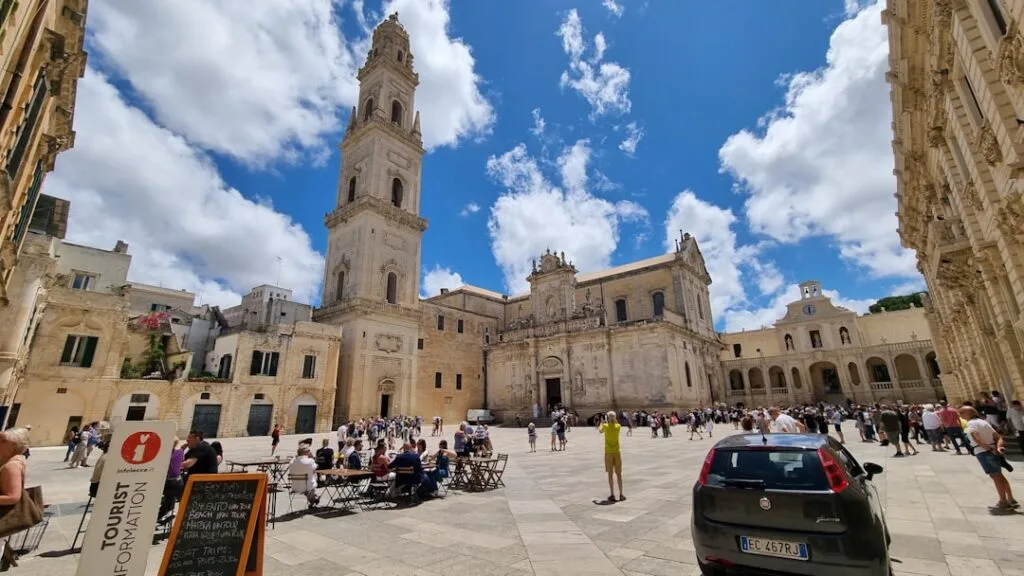
Visiting Lecce Cathedral, also called Cattedrale di Maria Santissima Assunta or Duomo di Lecce, is an experience that blends faith, Baroque art and everyday life in the Salento. Located in the very heart of the historic center on the splendid Piazza del Duomo, this cathedral is not just a place of worship: it is the symbolic and visual heart of Lecce, a city famed for its “barocco leccese,” a local take on the Baroque carved from the soft local stone, pietra leccese. For the curious traveler, a visit offers immersion in centuries of history, architecture and Italian religious practice, and a perfect chance to glimpse contemporary life as Leccesi live and work around the piazza.
Arriving at the Piazza del Duomo (Piazza del Duomo, 73100 Lecce LE, Italy), you’re first struck by the harmony of the ensemble: the cathedral itself, the episcopio (bishop’s palace), the seminary palace, and the campanile that towers over the square. Every façade, cornice and pilaster is richly decorated — grotesques, putti, floral motifs — each a clue to the virtuosity of 17th-century master stonecutters. The interior also holds surprises: a luminous nave, richly adorned side chapels, paintings and altarpieces, stucchi of remarkable finesse and an atmosphere that shifts with the hour and season, from morning stillness to late-afternoon services.
This practical guide will walk you through step by step, offering not only historical and descriptive information, but also essential practical details: exact addresses, approximate opening times, prices in euros, tips to avoid crowds, recommendations for climbing the campanile, and local pointers to enrich your visit (where to grab a coffee facing the square, which pedestrian routes to favor, how to combine the visit with the Museo Diocesano or the Basilica di Santa Croce). My aim is to help you plan a visit that’s both discovery-rich and logistically smooth, whether you’re a half-day visitor in a hurry or a slow traveler wanting to photograph every carved detail.
Finally, visiting Lecce Cathedral is not just about seeing a monument: it’s feeling the relationship between stone, light and the local community. Whether you’re an art lover, photographer, religious traveler, or a wanderer who loves old stones, this place will speak to you. The following sections detail the history and architecture, practical information (hours, fees, addresses), the best way to organize your on-site visit, and discoveries nearby to round out your day in the Salento.
History and architecture of the Cattedrale di Maria Santissima Assunta
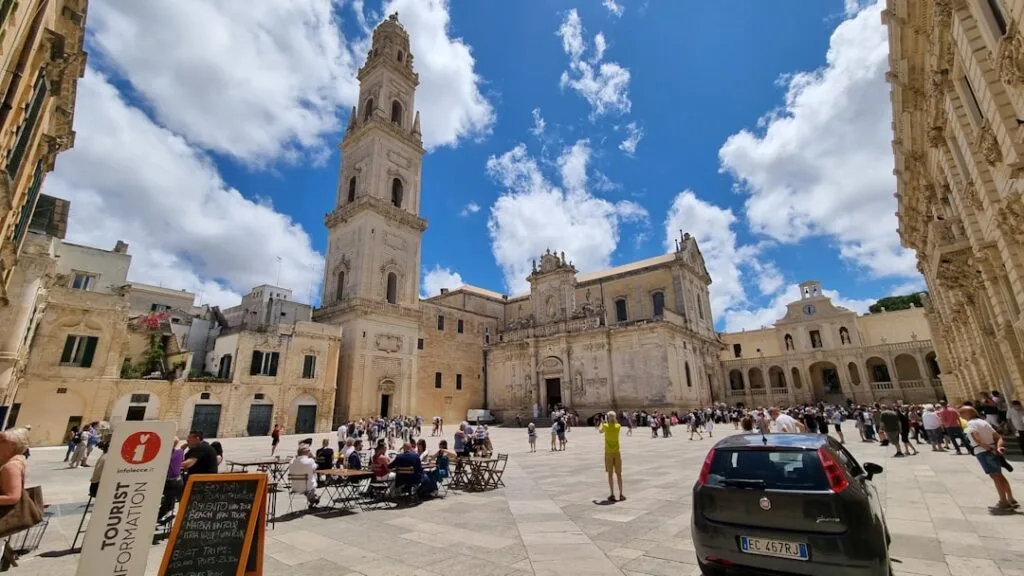
The Cattedrale di Maria Santissima Assunta in Lecce is the crowning achievement of the barocco leccese. The current building results from major 17th-century reconstructions over an older cathedral. The main architect often credited is Giuseppe Zimbalo, known as “Zingarello,” who left a deep mark on Lecce’s architectural heart. The outcome is a refined synthesis where Renaissance elements coexist with exuberant Baroque ornamentation, characterized by motifs carved in the local pietra leccese, easy to work and beautifully patinated by time.
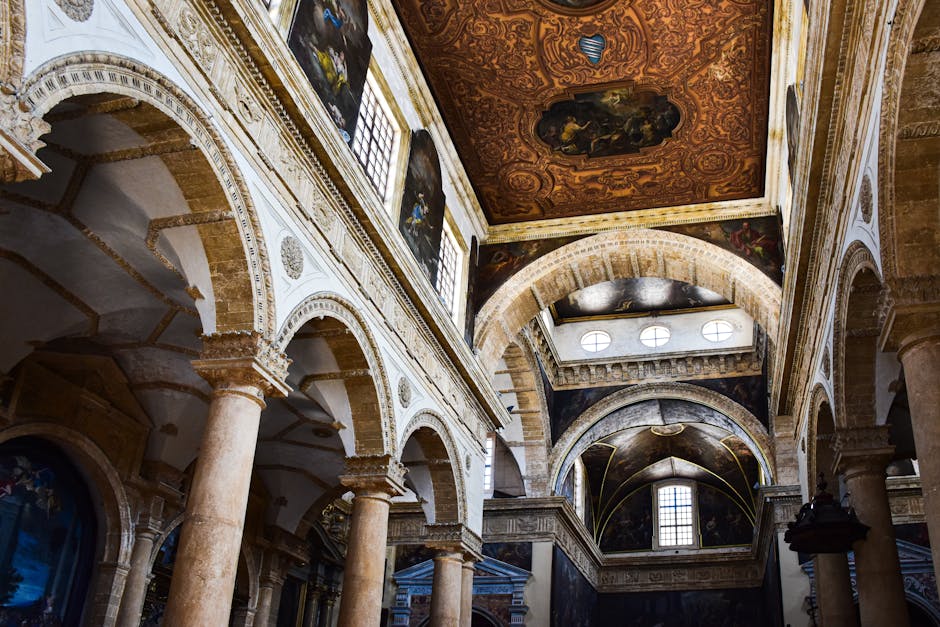
The cathedral’s façade on the Piazza del Duomo side is intentionally restrained compared with the more ornate façades elsewhere in the region, yet it still features a monumental portal and elegant windows. Inside, the main nave unfolds beneath a vault decorated with stucco and frescoes. Several side chapels, each dedicated to a saint or specific religious theme, display altarpieces and paintings from local and Neapolitan schools. Notable works include Baroque paintings, exceptionally crafted stuccoes and funerary sculptures of local prelates. The flooring, liturgical furnishings and high altar contribute to an atmosphere that is solemn yet warm.
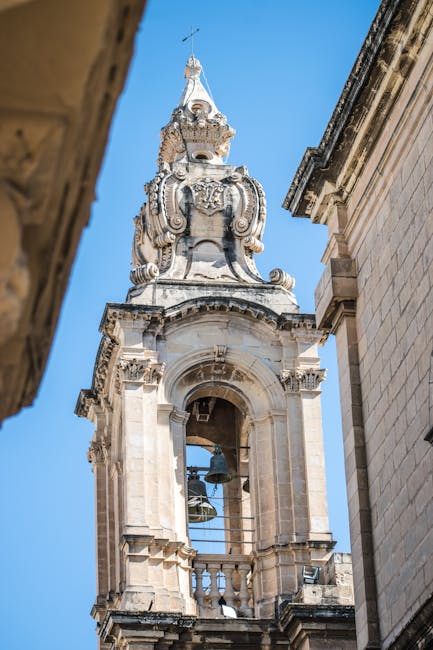
The campanile (Torre del Campanile), tall and slender, is an imposing structure dominating the square and offering panoramic views over Lecce’s rooftops and, in clear weather, the Salento countryside. The current tower has been restored several times and is a landmark for residents and visitors alike. Next to the cathedral are the Bishop’s Palace (Palazzo Vescovile) and the Museo Diocesano di Lecce, which preserves liturgical objects, sacred vestments and ex-votos, providing material context to the local ecclesiastical history.
 Click here to book a baroque and underground architecture tour
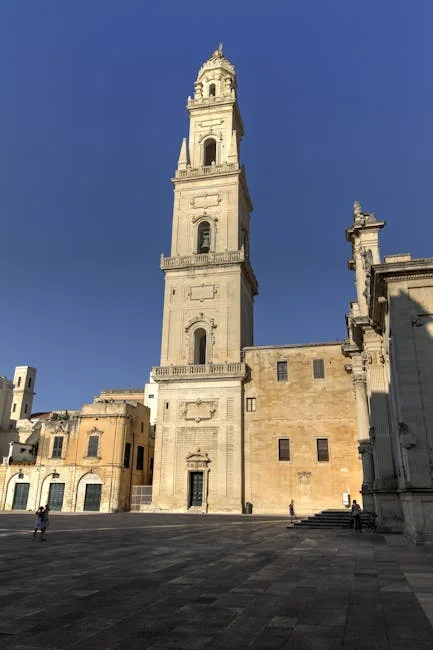
The cathedral is also tied to Lecce’s social and religious life: processions, patronal festivals and liturgical celebrations punctuate the year. The architecture is not merely decorative: it’s functional, designed to accompany services and religious rites. Local artisans, past and present, show a continuity of craftsmanship that makes Lecce a regional capital of carved stone. For the architecture enthusiast, the cathedral is a living lab: the mortar joints, cutting tools, weathering effects — each tells a technical as well as aesthetic story.
Practical information: addresses, opening times, prices and rules to know
Main address of the cathedral: Cattedrale di Maria Santissima Assunta (Duomo di Lecce), Piazza del Duomo, 73100 Lecce LE, Italy. For the Museo Diocesano: Museo Diocesano di Lecce, Piazza del Duomo 19, 73100 Lecce LE (often located right next to the cathedral within the episcopal complex). The campanile is accessible from the Piazza del Duomo via the entrance indicated on the square itself. These names and addresses make it easy to spot the sites on a map and plan a walking route from the central station (Stazione di Lecce) — about 20 to 25 minutes on foot — or from the main parking areas of the historic center.
Opening times (indicative — always check before your visit):
– Cattedrale di Maria Santissima Assunta: generally open daily for services and visits, roughly 8:00–12:30 and 16:30–19:00. Times may vary with the season and liturgical celebrations.
– Museo Diocesano di Lecce: often open 9:00–13:00 and 16:00–19:00, but closed on some public holidays.
– Torre del Campanile (panoramic visit): daytime slots, typically 10:00–13:00 and 16:00–18:30, depending on season and staff availability.
Prices (estimates and subject to change, in euros):
– Cathedral entry: usually free to visit the main church (donations welcome).
– Campanile access (guided visit or self‑ascent): around €3–€6 per person.
– Museo Diocesano di Lecce: ticket between €3 and €6, sometimes included in a combined Duomo+Museo+Campanile ticket (about €7–€10).
Many local museums offer discounts for students, seniors and families; check locally or on the diocese / per le informazioni turistiche di Lecce official site.
Rules and practical tips:
– Dress code: as with any cathedral, wear respectful clothing — shoulders covered and long skirts/trousers to enter without issue.
– Photography: photos are generally allowed in the nave; in some chapels or for Museo Diocesano exhibitions, flash may be forbidden.
– Accessibility: the main entrance is often accessible, but some areas (campanile platforms, older chapels) may have steps. Visitors with reduced mobility should inquire in advance to plan an appropriate route.
– Guided tours: available in high season and by reservation; they let you access areas closed to the public and provide detailed explanations of artworks and history.
Click here to book an archaeological and baroque tour with audio guide
Recommended experiences around the Duomo
Watch out for peak hours in high season.
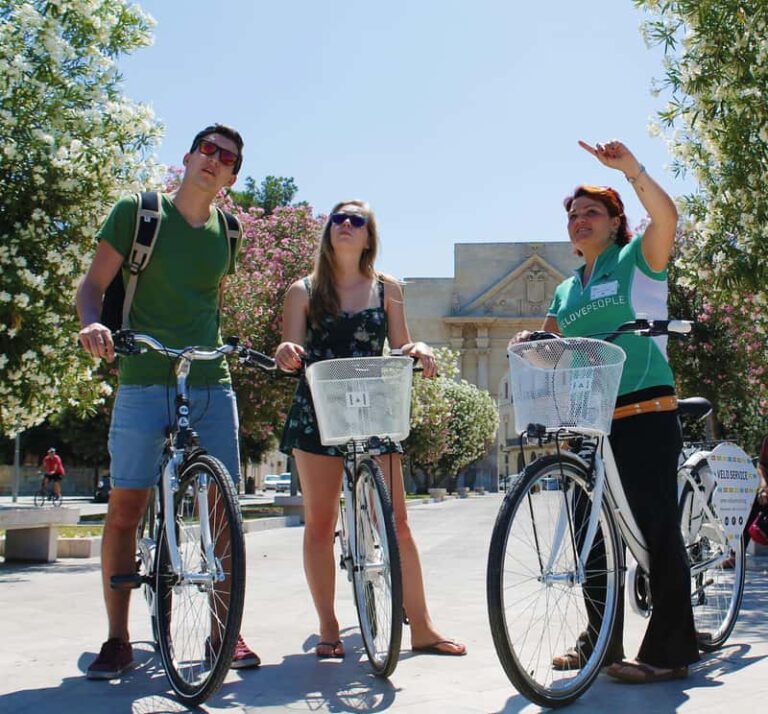
1. Historic center bike tour
Active route to quickly cover the main sights — Piazza del Duomo, Porta Napoli and Santa Croce — while enjoying local anecdotes. Ideal for getting your bearings early in your stay.
- ⏱️ Duration: 2 hours
- 🚶 Format: Guided bike tour
- 🗣️ Languages: French, English, Italian, Spanish
- 💡 Highlight: Covers the must‑see spots quickly
2. Private walking tour with tickets
Private and in‑depth: dedicated guide, tickets included for the cathedral and Santa Croce. Lets you enter calmly and get detailed explanations without queues.
- ⏱️ Duration: 2 hours
- 🎟️ Includes: Tickets for the cathedral and Santa Croce
- 🗣️ Languages: French, Italian, English
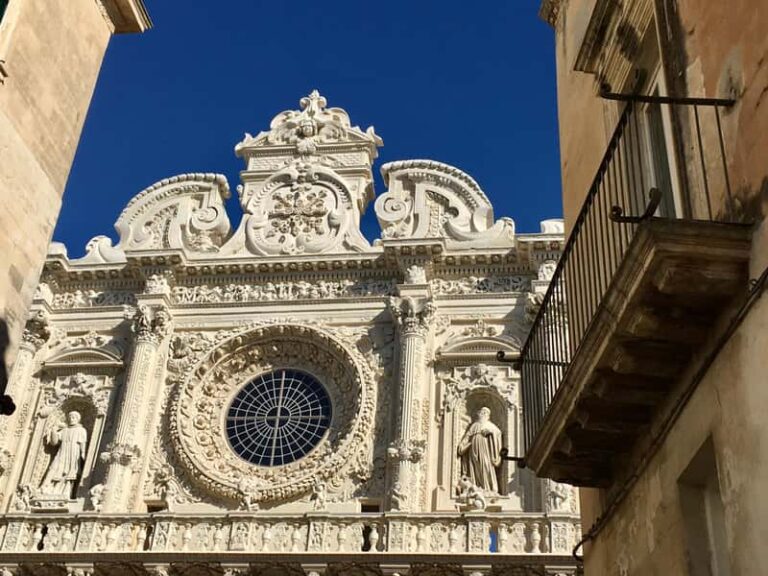
3. Archaeological audio guide + museum
Self‑guided, budget‑friendly option to discover Lecce at your own pace, with skip‑the‑line access to Museo Faggiano and a well‑documented audio route on Baroque and the underground remains.
- ⏱️ Duration: 24‑hour access
- 🎟️ Includes: Audio guide + museum ticket (Faggiano)
- 📍 Route: Alleyways, squares and archaeological museum
- 💡 Highlight: Independence and great value for money
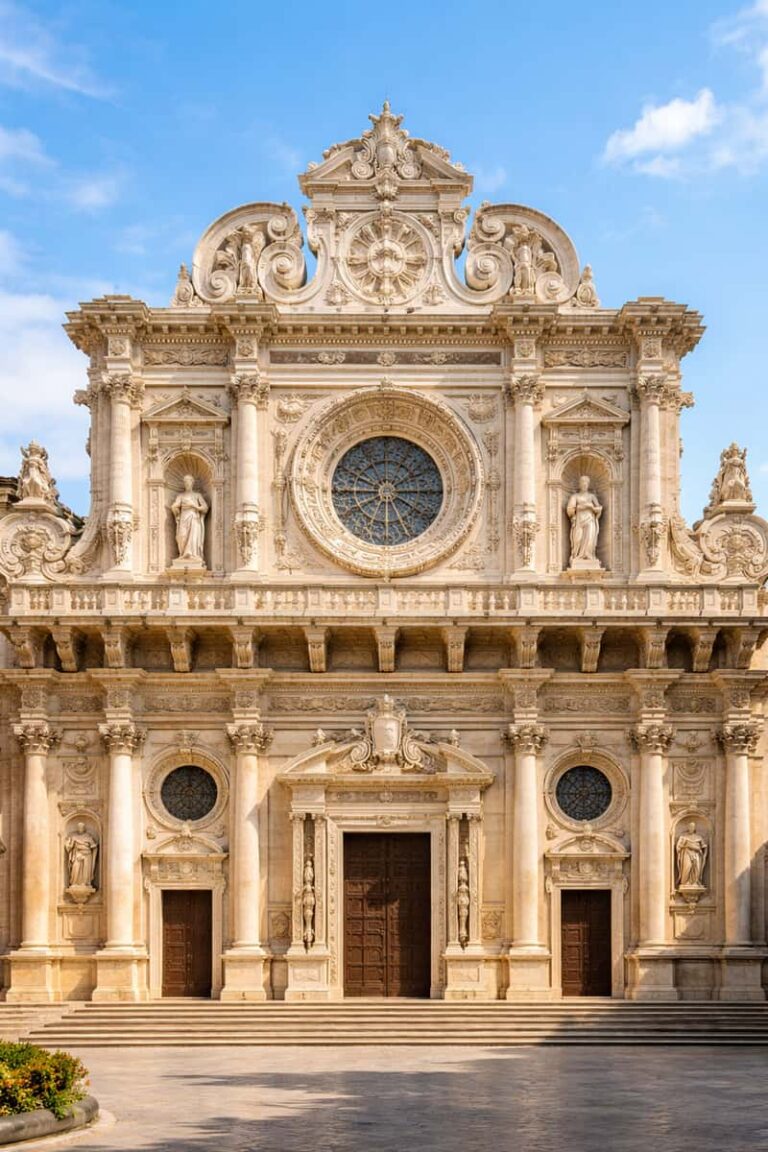
4. Short guided tour with entries
Condensed one‑hour route to capture the essence of Lecce Baroque: cathedral, cloister and Santa Croce. A good choice when time is tight but you want clear landmarks.
- ⏱️ Duration: 1 hour
- 👥 Format: Group guided tour
- 🎟️ Includes: Cathedral and Santa Croce entry
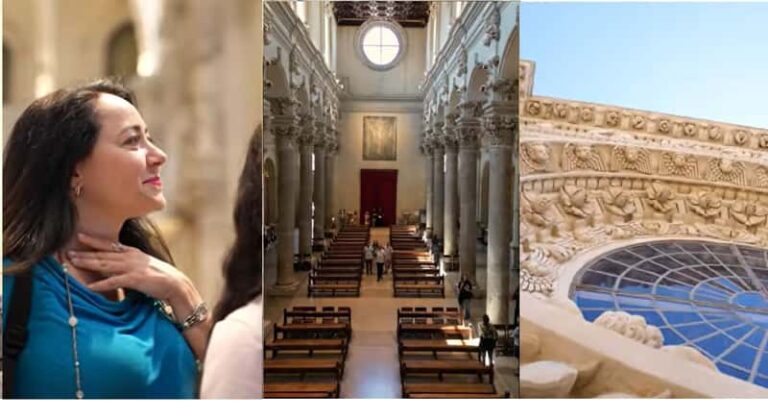
How to organize your visit: routes, best times, climb to the campanile and Museo Diocesano
To make the most of your visit, plan around the light and service times. Mornings just after opening are usually calm and offer favorable light for interior photography (low-angle rays through the windows). Late afternoon, around vespers, is perfect to feel the living dimension of the place, with the local community attending the service. Avoid peak tourist hours — midday in high season — if you want a more intimate experience.
Suggested itinerary (1–2 hours):
1) Start at Piazza del Duomo: take in the overall composition and read the historical plaques.
2) Enter the Cattedrale di Maria Santissima Assunta (10–30 minutes): explore the nave, side chapels, high altar and carved details.
3) Climb the Campanile (about 20–30 minutes depending on queues and ascent): the climb offers panoramic views over Lecce and the Salento. If possible, book or check available slots.
4) Visit the Museo Diocesano di Lecce (30–45 minutes): liturgical objects, vestments, manuscripts and ex-voto complete your understanding of the place.
5) Finish with a coffee/gelato on the piazza while watching local life.
Climbing the Campanile: the tower often requires a small paid entry (≈3–6 €). The ascent may be via a narrow spiral staircase; take care if you’re prone to vertigo. From the platform, the view over stone roofs, neighboring bell towers (notably the Basilica di Santa Croce) and the surrounding countryside is outstanding. For photographers, the best time is late afternoon or golden hour, when the golden light enhances the warm color of the pietra leccese.
Practical tips for your visit:
– Buy a combined ticket if offered: Duomo + Museo + Campanile is often cheaper than separate tickets.
– Carry small change (coins of 1–5 €) for minor expenses and offerings.
– If on a guided tour, ask about recent restorations: Salento sometimes undergoes interventions to stabilize the stone, which can affect the appearance of certain elements.
– Respect services: if you arrive during a mass, be discreet or come back a little later.
Around the cathedral: walks, restaurants, stations and local tips
Piazza del Duomo is an excellent starting point to explore Lecce’s old town. A short walk away you’ll find the Basilica di Santa Croce (Basilica di Santa Croce, Piazza S. Croce, 73100 Lecce LE), another Baroque masterpiece whose highly ornate façade contrasts with the Duomo. Don’t miss Piazza Sant’Oronzo (Piazza Sant’Oronzo, 73100 Lecce LE), home to the column of Sant’Oronzo and the anfiteatro romano (amphitheatre ruins), a 5–10 minute walk from the cathedral. These sites form a coherent, very photogenic walking route.
Restaurants and food breaks:
– For a morning coffee or breakfast, choose a local bar around Piazza del Duomo: cappuccino and cornetto are classics.
– For lunch or dinner, favor trattorie serving Salento specialties: fresh seafood, homemade orecchiette, “pucce” (local sandwiches) and dishes based on Salento olive oil. Rather than naming places that may change, look for venues with menus focused on local produce and a terrace overlooking a small piazza to enjoy the city scene.
– Tip: avoid restaurants right next to major tourist squares if you want good value; a 5–10 minute stroll into the adjacent lanes will lead you to tables frequented by locals.
Getting around and parking:
– From Stazione di Lecce: taxi or walk (≈20–25 min). Many local bus lines serve the center.
– By car: the historic center is largely restricted (ZTL); park in an authorized peripheral lot (for example parking via Taranto or via Leuca) and walk to the cathedral.
– By bike or on foot: the center is ideal for walking; wear comfortable shoes for stone slabs and sometimes narrow streets.
Local tips:
– Morning is peaceful and good for crowd-free photos.
– In summer, bring a water bottle and a hat — the stones heat up and the heat can be intense.
– If you like markets, combine your visit with a stroll along nearby shopping streets to find local crafts (leather bags, ceramics, objects in local stone).
– Take a moment to listen to the bells: their rhythm marks city life and often signals important liturgical moments.
Click here to book a daily excursion to Otranto and Gallipoli
Conclusion
Visiting the cathedral of Lecce, the Cattedrale di Maria Santissima Assunta, is diving into a city where art and devotion are written in stone. Between the façade, the nave, side chapels, the campanile and the Museo Diocesano, the cathedral offers a complete journey for anyone wanting to understand barocco leccese and Salento’s religious life. The practical information provided — address Piazza del Duomo, 73100 Lecce LE; indicative opening times; estimated prices; and tips on accessibility and the campanile climb — will help you prepare a smooth and rewarding visit. Remember that times and prices can vary with the season and events, so check official local sites or contact Lecce’s tourist office before you go.
To make the most of your stop, combine a visit to the Duomo with the Museo Diocesano and the climb up the Torre del Campanile for a full understanding and unique panoramic views. Then lose yourself in the lanes of the historic centre, taste Salento specialties and let the warm atmosphere of the cafés and trattorie charm you. The Piazza del Duomo itself is a meeting place where tourists and locals converge: taking a moment to sit and watch is often the most rewarding activity after admiring the architectural masterpieces.
Finally, respect the place and its practices — dress appropriately, be discreet during services, and support heritage conservation if you can through donations or by purchasing a museum ticket. Whether you’re seeking artistic beauty, spiritual serenity, or simply a lovely stroll through a city of endless charm, Lecce’s cathedral awaits with its golden stones, finely carved sculptures and memorable panoramas. Have a great trip and enjoy your visit to sumptuous Lecce!