





Introduction: Diving into Lecce’s basilicas and cathedrals
Lecce, often nicknamed the « Florence of the South » for its explosion of baroque facades, is a city where stone tells centuries of history. In the heart of the Salento in Puglia, every cobbled alley leads to a religious building that has served as both spiritual witness and artistic expression. This guide focuses on Lecce’s basilicas and cathedrals: their architecture, histories, hidden treasures and practical information to plan your visit. Whether you’re a curious traveler, baroque art lover, photographer hunting striking angles, or a pilgrim seeking quiet reflection, Lecce offers a rich and varied palette.
This detailed guide offers an immersive read: architectural descriptions, full monument names, exact addresses, prices in euros, opening hours, local practical tips and suggested routes to make the most of your discoveries. The city boasts exceptional religious heritage — facades carved like lace in stone, interiors adorned with stuccoes, side chapels rich in paintings and relics, peaceful cloisters and diocesan museums preserving ecclesiastical treasures. Lecce also surprises: the southern sun’s play of light highlights sculpted reliefs, and the quiet moments of early morning or late afternoon provide an almost intimate experience.
Throughout this guide you’ll discover the Basilica di Santa Croce — a symbol of Leccese baroque —, the Cattedrale di Maria Santissima Assunta (Lecce’s Duomo) and other remarkable churches less known to the general public but equally fascinating. We’ll detail the best time slots for visits, how to reach the buildings on foot from central squares, what tickets to expect, and local tips (proper behavior in places of worship, where to grab a typical coffee after the visit, how to photograph without disturbing, etc.). This document aims to be a comprehensive companion to get the most from your religious and cultural stay in Lecce.
Before diving in, keep in mind that schedules can vary due to Masses, local religious celebrations and tourist seasons. It’s therefore advisable to check parish updates or local tourist office information before you leave. Finally, this guide includes visual cues throughout the paragraphs to help you picture scenes and prepare your photos: facade views at sunrise, close-ups of carved details, interiors lit by stained glass, etc. Enjoy discovering sacred Lecce!
Basilica di Santa Croce: masterpiece of Leccese baroque
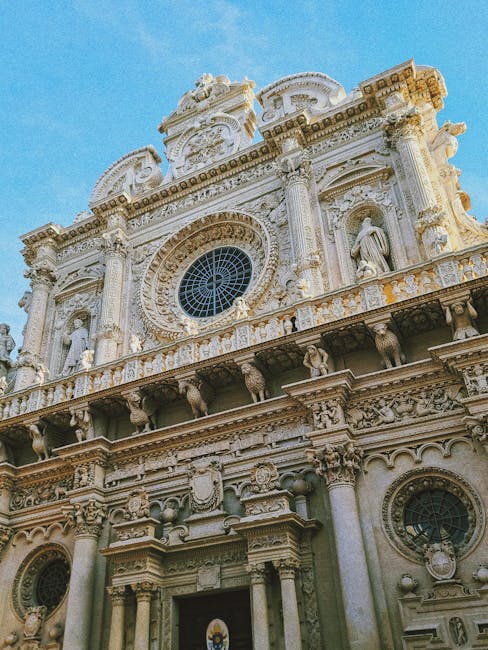
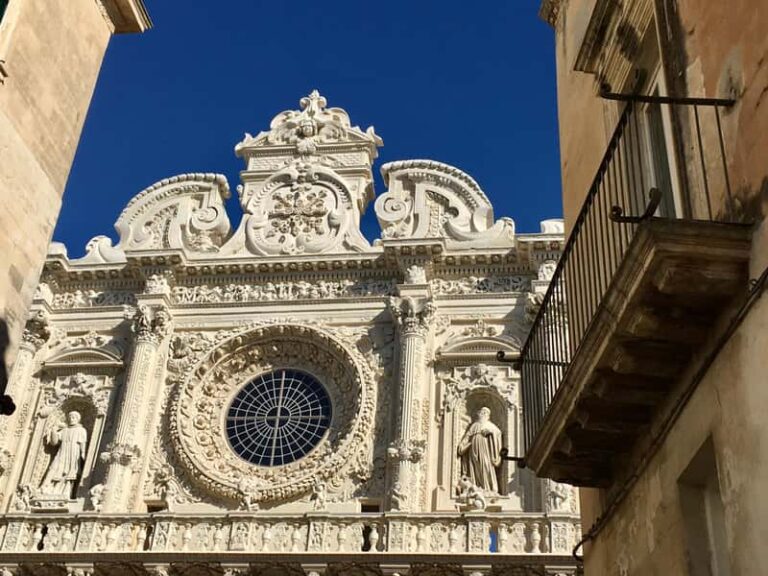
The Basilica di Santa Croce is undoubtedly the showcase of Lecce’s baroque. Full name: Basilica di Santa Croce (Basilica della Santa Croce). Address: Piazza Santa Croce, 73100 Lecce LE, Italy. Built mainly between the 16th and 18th centuries, Santa Croce’s facade is an explosion of ornamentation: angels, grotesques, mythological figures, volutes and arabesques intertwine across the local stone — pietra leccese — in a golden hue that catches the sunlight. As you approach, your eye is drawn to the large upper window and the finely carved main portal.

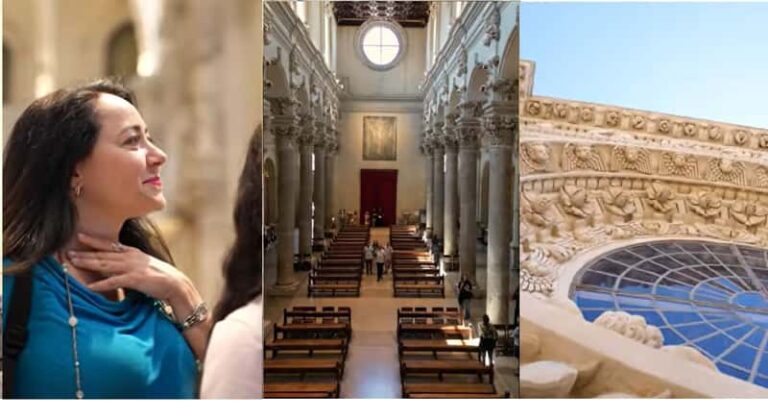
Interior: the basilica features a single nave richly decorated. The stuccoes, side chapels and the choir contain baroque altars and paintings from various periods. One not-to-miss element is the adjacent cloister — a peaceful spot where the architecture breathes differently: arches, columns and intimate gardens recall the site’s monastic and communal role.

Hours and prices: the basilica is often freely accessible for visiting the church itself; many parishes charge a symbolic fee for access to the cloister or museum areas (if open). As a guideline: church entry free; cloister / guided visit paid and variable (around 2–5 €); typical hours: 9:00–12:30 and 16:00–19:30 (times may change on holidays and for services). Always check the notices at the entrance or the parish website.
Practical tips: arrive early in the morning to enjoy the facade bathed in first light — it’s the ideal time for photography without crowds. Respect dress codes (shoulders covered, no very short shorts) when visiting during Mass hours. If you’re passionate about ornamentation, bring a macro lens or a photo magnifier: the carved details are tiny and abundant. Finally, combine the visit with a stroll in the nearby university quarter to enjoy a coffee or a pasticciotto (local pastry) at one of the historic bakeries.
 Click here to explore Lecce’s baroque architecture and undergrounds
Cattedrale di Maria Santissima Assunta (Duomo di Lecce): religious heart and museum complex
Lecce’s cathedral, full name Cattedrale di Maria Santissima Assunta, is the seat of the bishop and stands on the picturesque Piazza del Duomo, considered one of Italy’s most beautiful squares for its baroque layout. Address: Piazza del Duomo, 73100 Lecce LE, Italy. The complex includes the cathedral itself, the campanile (bell tower), the bishop’s palace and the diocesan museum (Museo Diocesano).
Architecture and interior: the exterior facade — restrained compared to Santa Croce — opens onto an interior with three naves enhanced by altars, frescoes and stuccoes. The choir, adorned with carved wood and marble, houses relics and remarkable works. The campanile, over 70 meters high, offers panoramic views of the historic center for those who climb it (subject to availability).
Diocesan Museum (Museo Diocesano): housed in the former bishop’s palace, it preserves a collection of liturgical vestments, silverware, paintings and liturgical objects. Address: Palazzo Vescovile, Piazza del Duomo, 73100 Lecce. Indicative fares: cathedral entry free; Museo Diocesano €4–6 (full price), reductions for students or groups and sometimes a combined ticket with the bell tower (around €8–10 for the combo). Typical opening hours: cathedral usually open 8:00–12:00 and 16:30–19:30; Museo Diocesano 9:00–13:00 and 15:30–18:30. Times vary with religious services and events.
Practical tips: for a full view, combine the church visit with the Museo Diocesano and the climb up the bell tower when possible. The ascent may be restricted during Sunday masses — plan to go outside worship times. In the late afternoon, the golden light on the Sant’Oronzo column and surrounding façades offers exceptional views from the Duomo forecourt. Also recommended: join a short guided tour (often available in multiple languages) to understand the iconographic cycles and local ecclesiastical history.
Click here to book an archaeological and Baroque tour with audio guide
Choose the tour that suits you
Watch the opening hours and crowds depending on the season.
Masses, local festivals and high season often change church opening windows and access to paid areas (cloister, bell tower, museums). Check official times before you go and favor early morning or late afternoon to avoid crowds and enjoy the best light.
1. In-depth private tour
Private walking tour (2h) with tickets included for the Basilica di Santa Croce and the Duomo. Led by a local specialist, the route combines carved details, ecclesiastical history and access to main monuments without queues.
- ⏱️ Duration: 2 hours
- 🚶 Format: Private walking tour
- 🎟 Included: Tickets for Santa Croce and the Duomo included
- 💬 Languages: Italian, French, English
2. Compact, budget-friendly guided tour
One-hour route focused on Lecce’s Baroque: Piazza Duomo, Museo Diocesano and Santa Croce. A quick, inexpensive option for a first overview or a visit between activities.
- ⏱️ Duration: 1 hour
- 🚩 Start: Piazza Duomo, at the foot of the bell tower
- 🚶 Format: Guided walking tour
- 🎟 Included: Free entries to Santa Croce and the Duomo
- 💬 Languages: Italian
Secondary churches and basilicas to discover: Sant’Irene, Chiesa di Santa Chiara and San Matteo
Beyond the two main monuments, Lecce is full of smaller religious buildings that are equally full of character. Among them: Chiesa di Sant’Irene, Chiesa di Santa Chiara and Chiesa di San Matteo. These sites show the diversity of artistic interventions across centuries and invite a more intimate exploration, away from the main tourist flows.

Chiesa di Sant’Irene (Santa Irene Martire) — full name: Parrocchia di Sant’Irene: located near Piazza Sant’Oronzo, it is dedicated to Lecce’s martyred patron. Approximate address: Piazza Sant’Oronzo / Via Sant’Irene area, 73100 Lecce LE, Italy. Sant’Irene has a simple façade and an interior decorated with frescoes and side baroque altars; the statue of Sant’Irene is central to the patronal festivities. Hours: generally open around service times, morning and late afternoon; free entry, but respect mass times. Best time to visit is between 10:00 and 13:00 on non-Sundays.

Chiesa di Santa Chiara — full name: Complesso di Santa Chiara — is a monastic complex whose cloister and church are worth visiting for their contemplative atmosphere. Address: Via Carducci / historic quarters near the center, 73100 Lecce LE, Italy (the complex is in the medieval core within walking distance from Piazza del Duomo). Hours: access to the cloister and parts of the church may be limited; visits often possible in the afternoon; entry sometimes free or by voluntary contribution.
Chiesa di San Matteo — full name: Chiesa di San Matteo Apostolo — is a small neighborhood church showing a stylistic mix of Renaissance and Baroque elements. Address: located in the historic center, accessible from Via Vittorio Emanuele II / via Giuseppe Libertini area, 73100 Lecce LE, Italy. Hours: often open during the day, free entry. San Matteo offers interesting architectural details (sculpted capitals, marble altars), much appreciated by lovers of carved details.
Practical tips for these secondary visits: bring a small torch or enable HDR photo mode to capture sometimes dim interiors. These churches are often used by the local community: avoid noisy visits during services, and check for closure days (some closures occur for liturgical reasons). Finally, enjoy the adjacent squares to watch daily life: local bars, markets, artisans working the pietra leccese just a few steps away.
Click here to join a guided tour and papier-mâché workshop
Recommended routes and visit combinations
To make the most of a day in Lecce focused on its basilicas and cathedrals, here are routes designed for different time budgets and interests. Each route includes practical info (estimated duration, food stops, photo tips).
« Quick Discovery » route (2–3 hours): start at the Basilica di Santa Croce (Piazza Santa Croce) at sunrise to avoid crowds and enjoy the light. Then walk 8–10 minutes to the Cattedrale di Maria Santissima Assunta (Piazza del Duomo) for an interior visit and, if possible, the Museo Diocesano. Finish with a coffee break at Piazza Sant’Oronzo. Duration: about 2–3 hours. Costs: Santa Croce (church entry free), Duomo (free); Museo Diocesano (€4–6 if visited).
« Art Deep Dive » route (4–6 hours): begin at the Basilica di Santa Croce, then explore the smaller churches (Sant’Irene, Santa Chiara, San Matteo) on foot, taking time to study the details. Include the Museo Diocesano and climb the Duomo bell tower if it’s open. Lunch break in a central trattoria with Salento specialties. Duration: half a day. Estimated costs: Museo Diocesano €4–6, bell tower climb €3–5, meal €10–20 depending on the venue.
Click here to book a 3-hour guided tour of baroque secrets
« Photographer » route (morning + golden hour): for photography, plan two visits: early morning at the Basilica di Santa Croce (lit façade) and late afternoon at the Duomo (golden light on the stone). Look for sculpted details from low angles and close-ups of trompe-l’oeil and grotesques. Gear: compact tripod for golden hour and filters to balance bright skies with golden façades.
Logistical tips: most buildings are walkable from Lecce station (about 20–30 minutes on foot depending on your pace), or reachable by local buses if you have luggage. The historic center’s streets are often narrow and cobbled — comfortable shoes recommended. On busy tourist days or religious festivals (Sant’Oronzo patron feast, Holy Week processions), expect queues and schedule changes.
Local practical tips, useful information and expected behavior
Visiting Lecce’s churches requires a mix of artistic curiosity and respect for places of worship that are still very much alive. Here’s a summary of tips and information for a smooth, worry-free visit.

Opening hours: hours often vary by season and according to services. Generally, churches open in the morning around 8:00–9:00, close around 12:30–13:30 for Mass or a break, and reopen in the afternoon around 15:30–16:00 to close in the evening around 18:30–19:30. Museums (Museo Diocesano) have more regular hours (often 9:00–13:00 and 15:30–18:30), but it’s strongly recommended to check online or by phone the day before.
Prices and tickets: many churches allow free entry to the worship area. Museums and bell tower climbs are paid: expect €3–10 depending on services and possible discounts (students, seniors). Some sites offer combo tickets for the Museo Diocesano + bell tower climb. For private guided tours, budget €40–80 for a local guide (ask for guides authorized by the tourist office).
Behavior and etiquette: respect ongoing services (no loud talking, avoid flash during ceremonies). Dress: shoulders and knees covered in places of worship. If you photograph, check signage: some chapels prohibit photography. Tips aren’t expected in churches, but leaving a small donation in the parish box is appreciated if you received special access or a volunteer-led tour.
Transport and access: the historic center is easily explored on foot; parking is available on the outskirts (Piazza Palio, via prov.le per Frigole, etc.) if you travel by car. Lecce station is served by regional trains from Brindisi and Bari; from the station, allow 20–30 minutes on foot to reach the baroque heart. City buses and taxis are available for quick connections or if you have a lot of luggage.
Safety and comfort: Lecce is generally safe for tourists. Still keep an eye on personal belongings in busy areas. Wear comfortable shoes for walking on pietra leccese and cobbles. Bring water in summer — temperatures can rise quickly — and favor visiting early morning or late afternoon to avoid the heat.
Conclusion: experiencing Lecce through its basilicas and cathedrals
Lecce reveals itself as a city of stone that breathes sacredness and art on every corner. Its basilicas and cathedrals are not mere static monuments: they reflect a community, a history and a craft tradition passed down through the ages. From the sumptuous façade of the Basilica di Santa Croce to the liturgical and museum spaces of the Duomo, and the small neighborhood churches, every visit is an opportunity to understand the central role of religion in local identity and to admire the virtuosity of Lecce’s sculptors and master builders.

Practically speaking, a well-planned day lets you combine must-sees with more offbeat discoveries: start early, prioritize complementary visits (diocesan museum, bell tower climb), and take time to wander the alleys to stumble upon decorated chapels or artisan workshops. Respect service times and behavior rules: these places remain primarily spaces of faith for locals. By paying a small contribution when asked, you help preserve fragile works and keep sites open to the public.

Finally, let the city surprise you beyond its churches: the local cuisine, shaded terraces, small craft shops and seasonal religious events complete the experience. If you’re a photographer, plan two visits (morning and golden hour) to capture the golden stone from different angles. If you’re a history lover, allow time for the Museo Diocesano and the local archives. Lecce, with its basilicas and cathedrals, offers a full experience—spiritual, aesthetic and human—that lingers long in visitors’ memories.