





Introduction: A Baroque Stroll Among Lecce’s Historic Churches
Lecce, the beating heart of Puglia in Italy’s heel, is often nicknamed the “Florence of the South.” That reputation comes largely from the exuberance of its local Baroque — leccese baroque — which turns soft limestone into a lacework of carvings, scrolls and masks. Beyond the civic palaces and secular facades, it’s the churches that best embody the city’s artistic and spiritual wealth. This walking route will take you, step by step, to Lecce’s main sanctuaries: from grand basilicas to tiny chapels and silent cloisters where the scent of incense and damp stone still lingers.
The walk is designed to be doable in one to two days depending on your pace: each stop is a short stroll from the last, all within the old historic center — a maze of narrow streets where every stone corner tells a story. You’ll learn how to read sculpted façades, spot religious symbols and understand how church commissions shaped local art between the 16th and 18th centuries. Between visits I’ll share practical tips: where to grab a coffee, how to climb the bell tower, which times to pick to avoid crowds, and the quiet moments best suited to contemplation.
Exact addresses, opening hours and entry fees are listed for each building so you can plan your day without surprises. Some churches are free to enter, others charge a small fee to support upkeep, museums or bell‑tower access. I also include local recommendations on respectful dress, the best light for photos (soft morning light or golden backlight at dusk), and ideas for combining church visits with tasty breaks at traditional cafés or gelaterie. Whether you’re into sacred art, chasing baroque photo angles, a curious pilgrim or simply a traveler in search of beauty, this route will guide you through Lecce’s historic churches with precision and passion.
Finally, remember that Lecce is a city to be lived. Beyond official opening times you’ll meet priests, parishioners and local caretakers who shape these places’ spirit. Take time to chat, sit on a bench in a cloister’s shade or wait for the light to pierce a rose window. This guide gives you the keys to turn a simple visit into an immersive, respectful local experience.
 Click here to book a 3‑hour tour of baroque secrets
Basilica di Santa Croce (Piazza Santa Croce) — A Jewel of Leccese Baroque
Address: Piazza Santa Croce, 73100 Lecce LE
Opening hours: Daily 09:00–19:00 (hours may change during religious events). Check at the entrance for occasional closures.
Admission: Free entry to the basilica. Optional guided visits of the complex and cloister: €4–6.
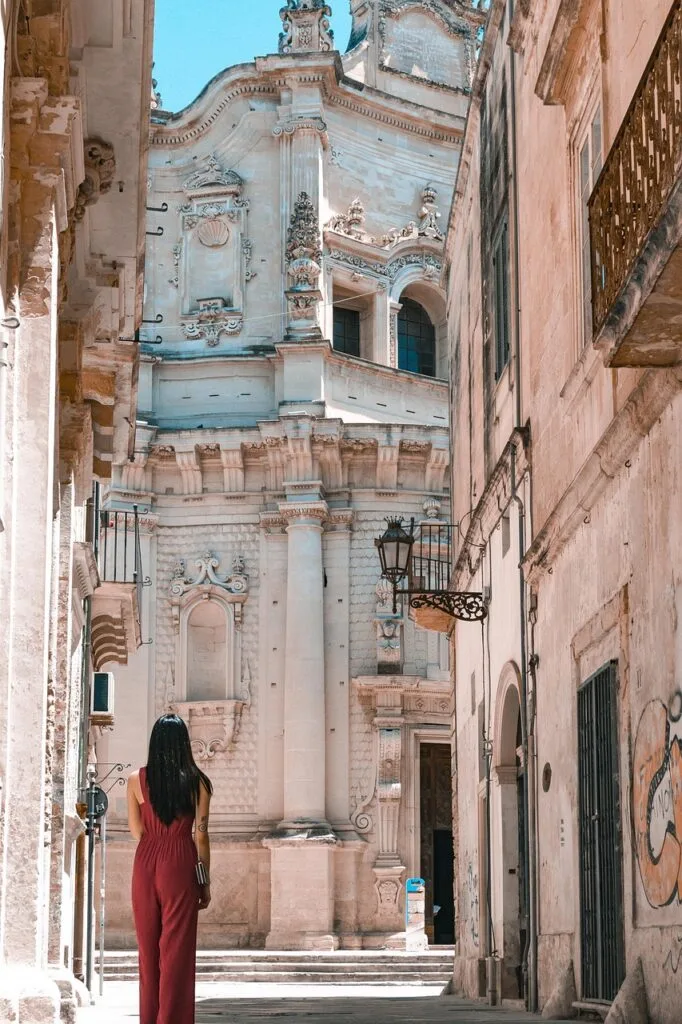
The Basilica di Santa Croce is often the first stop on a Lecce route — its façade is iconic: a riotous Baroque composition carved from local stone (carparo), full of angels, demons, shells and grotesques. Inside, the choir screen, chapels and ceiling reveal a profusion of decoration where the sacred blends with theatricality. The façade is especially photogenic in the morning, when side light carves out relief and shadow. Take time to study the rose window and the main portal, and don’t miss the donor inscriptions that testify to the city’s aristocratic patronage.
Click here to book a 2‑hour guided baroque tour

Practical tips: arrive early to avoid tourist buses. If you want an in‑depth visit, book the guided tour at the welcome desk on Piazza Santa Croce. The basilica often hosts small sacred music concerts — check the notice boards for a unique musical experience.
Cattedrale di Maria Santissima Assunta (Duomo di Lecce) — The City’s Liturgical Heart
Address: Piazza del Duomo, 73100 Lecce LE
Opening hours: Monday–Saturday 07:30–12:00 and 16:30–19:30; Sunday masses at 08:00, 10:00 and 19:00. Museum and bell‑tower opening: 09:30–13:00 and 15:00–18:00.
Admission: Cathedral entry is free. Access to the Museo della Cattedrale and bell tower: €5–7 (reduced rates for students and seniors).
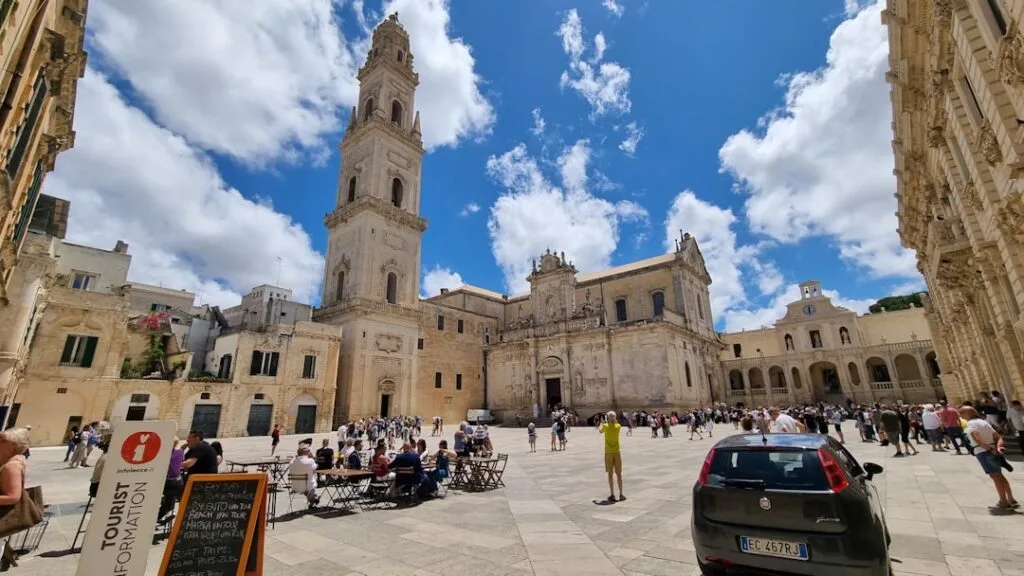
The Cattedrale di Maria Santissima Assunta presides over Piazza del Duomo, a monumental ensemble that includes the bishop’s palace, the chapter house and the bell tower. Inside, the nave is relatively restrained compared with the flamboyant exteriors, but the side chapels hide altarpieces, frescoes and polychrome marble altars. Don’t miss the sacristy and the Cathedral Museum where liturgical textiles, reliquaries and old engravings are displayed.
Click here to book the archaeological tour with museum ticket
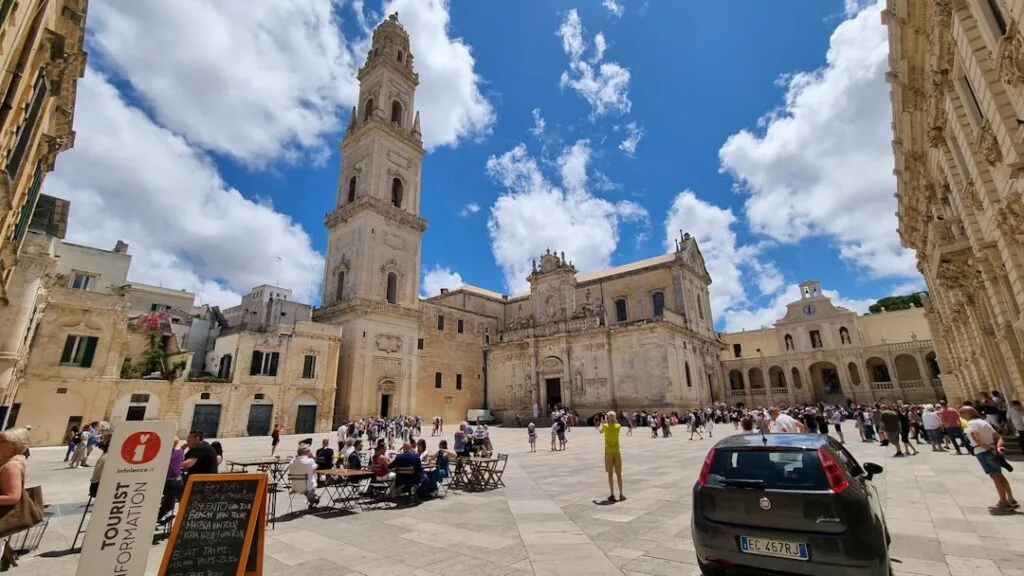
Practical tips: if you can, climb the bell tower for panoramic views over Lecce’s rooftops and the piazza. Ascents are often limited to small groups of 10–15 people; it’s wise to buy your ticket early in the morning or reserve online if possible. Respect mass times: access may be temporarily restricted during solemn services.
Chiesa di Sant’Irene — Small, Intimate and Rich in History
Address: Piazza Sant’Irene, 73100 Lecce LE
Opening hours: Daily 08:00–12:00 and 16:30–19:30 (hours may vary during local celebrations).
Admission: Free entry; suggested donation €1–3 for upkeep.
The Chiesa di Sant’Irene, dedicated to Lecce’s patron saint, sits on a small square that bears her name. Less monumental than Santa Croce or the Duomo, Sant’Irene charms with a hushed atmosphere and decorated chapels. The church features an elegantly adorned apse and a series of Baroque religious paintings. The statue of the saint — often dressed up for the patronal feast (the Madonna della Patrona) — is a focal point of active devotion.
Practical tips: if your visit coincides with the patronal festival (usually in May), expect a lively, popular atmosphere, processions and street stalls. Inside, the light is dim; bring a small sketchbook if you like to draw architecture or jot down iconographic notes. Locals are welcoming — don’t hesitate to ask parishioners or staff for a few explanations.
Chiesa di Santa Chiara and the Poor Clares’ Cloister — A Refuge of Serenity
Address: Via Umberto I, 73100 Lecce LE (Convent and Chapel of Santa Chiara, main access from the small adjacent piazza)
Opening hours: Cloister and chapel visits: 09:00–12:30 and 15:30–18:00 (closed during the nuns’ services).
Admission: Entry to the cloister and chapel: €3–5; guided visits on request €6–8.
The Chiesa di Santa Chiara is attached to a convent where the Poor Clares once lived. The real charm is the inner cloister — a calm space with a fountain, arcades and hanging gardens — an oasis of cool when Lecce’s summer heat sets in. The church also contains fine altarpieces and areas paved with majolica tiles. It’s an ideal spot for a meditative pause between busier tourist stops.
Practical tips: respect the quiet of the place: shoot photos without flash and avoid loud talking. If you’d like to attend a prayer, check the schedule and be punctual; some parts of the convent are only accessible during parish‑led guided tours.
Chiesa di San Matteo and Small Hidden Chapels — Little‑known Treasures
Address: Via San Matteo (or Via G. Palmieri depending on your walking route), 73100 Lecce LE (entrance from the pedestrian alley)
Opening hours: Generally 10:00–13:00 and 16:30–19:00; annex chapels have irregular hours.
Admission: Free entry; suggested donation €1–3 for conservation.
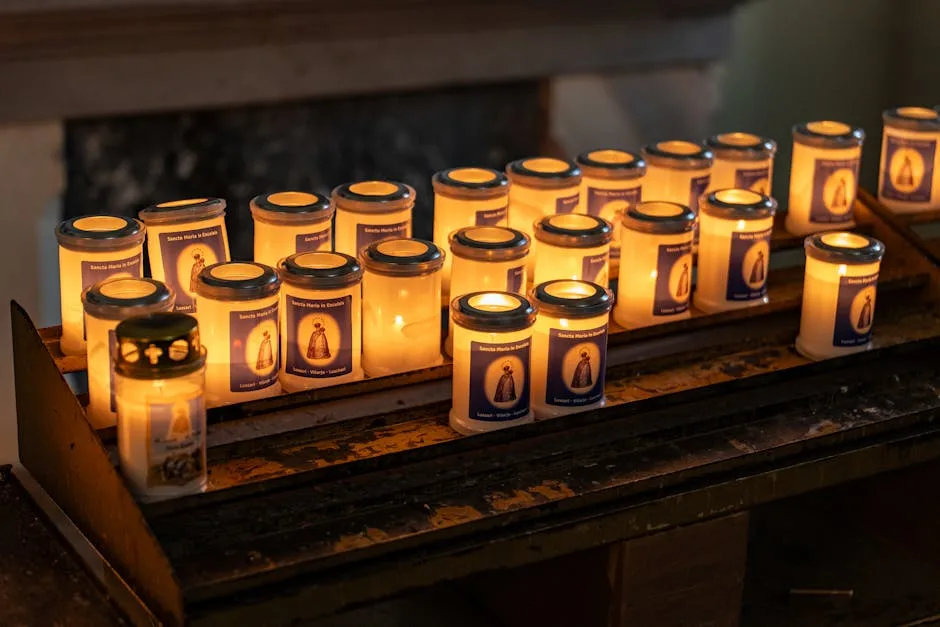
Although the Chiesa di San Matteo’s façade is less showy than Santa Croce’s, it stands out for intimate altars, delicate stuccoes and frescoes. Around San Matteo, the neighborhood is full of little chapels and wayside shrines tied to local confraternities: each has its own aesthetic, ex‑votos and sometimes pieces of local goldsmithing. This part of the route is perfect for authenticity lovers and for those who enjoy hunting down details off the beaten track.
Click here to book a personalized photography tour
Practical tips: pick up a map of the historic center at the tourist office — some chapels are tucked away from the main streets. In the late afternoon, low light reveals the texture of stucco and gilt: an ideal time for intimate photographs. If you meet elderly parishioners, they’ll often be happy to share stories about the confraternity and local festivities.
General logistical tips for your walking route
- Shoes: Choose comfortable, slip‑resistant footwear: cobbles and limestone can be slippery, especially after rain.
- Dress code: Respect liturgical rules: shoulders and knees should be covered in churches.
- Photography: No flash in most churches; some may require the purchase of a photo permit (rare but possible).
- Hydration: Carry a small water bottle: summers can be hot and many streets are exposed to the sun.
- Transport: The route is entirely on foot; the nearest parking is usually found around the historic walls if you arrive by car.
Conclusion: Experience Lecce to the Rhythm of Its Bells
Visiting Lecce’s historic churches on foot is more than an architectural tour: it’s immersion in time, a string of sensory experiences where stone, light and prayer compose a Baroque symphony. Sculpted façades, hushed naves, shaded cloisters and secret chapels tell centuries of religious history, craft and devotion. Following this route you’ll cover the highlights — the Basilica di Santa Croce and the Cattedrale di Maria Santissima Assunta — as well as quieter discoveries like hidden chapels and Santa Chiara’s cloister, perfect for contemplative pauses.
Plan your timing to enjoy morning light on the façades or the dusk that gilds the stone; climb the bell tower for a panoramic view; and allow time to hear a service or a sacred concert if the opportunity arises. Costs are generally modest — from free entry to €5–7 for museum or bell‑tower access — and these contributions go directly toward conserving these treasures. Most of all, strike up conversations with locals: oral histories and local anecdotes will enrich your visit far beyond what’s written on a guide. Lecce reveals itself when you give it time, slow your pace and allow yourself to stop at a doorway, a bas‑relief or a shaft of light through a stained glass window. This walking route offers not only an architectural reading of Leccese Baroque but a living understanding of the relationship between a city and its faith, between its stones and its voices.
Safe travels — or rather, buona passeggiata — through Lecce’s sacred lanes.