





INTRODUCTION
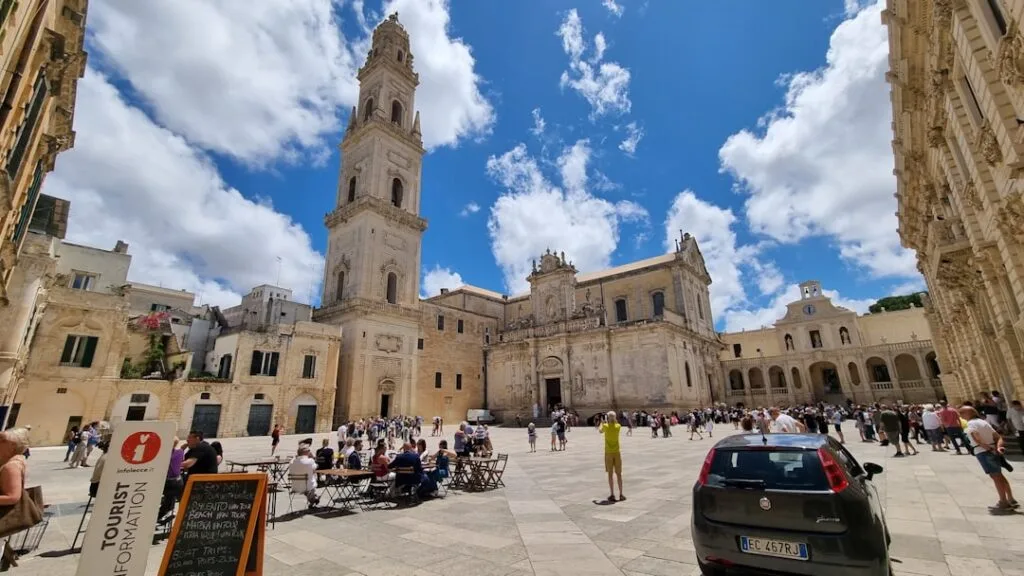
Lecce, the “Florence of the South,” is one of Italy’s baroque treasures. Nestled in the heart of Puglia, the city breathes history through its local stone, the pietra leccese, which lends itself to swirling carvings, exuberant facades and interiors full of feeling. For travelers hungry for sacred architecture, Lecce offers an almost insider’s route: churches and basilicas that tell the baroque golden age of the 17th and 18th centuries, when craftsmen and master sculptors turned stone into lace.
Visiting Lecce’s baroque churches isn’t just about admiring finely chiselled portals; it’s about stepping into spaces where light sculpts the polychromy of stuccoes, where side altars reveal painted altarpieces, and where every chapel holds a story of confraternities, popular devotion and artistic exuberance. These monuments have served both as a stage for faith and as civic emblems: they show the pride of a city that asserted its identity through art.
In this article we walk you through the ten must-see baroque churches in Lecce, with practical, on-the-ground details — exact addresses, opening hours, entrance fees, visiting tips — and immersive descriptions for each site. Whether you arrive in the height of summer, when the golden facades glow under the sun, or in winter, when the stone darkens and the interiors warm up with a golden haze, these pages will help you plan a sensory-rich route. We’ll also share local tips: best times to avoid crowds, walking-route combos, nearby cafés and workshops, and what to watch for around mass times and temporary exhibitions.
The suggested itinerary here works for every profile: baroque architecture enthusiasts, photographers hunting compelling frames, curious minds interested in religious history, and food-loving travelers who want to pair culture with local cuisine after each stop. Each entry is numbered and detailed so you can build a full day, a half-day or a multi-day loop in Lecce. Many of these churches lie within a compact area — you can visit several on foot in a single morning — but each deserves that you slow down, listen and look closely.
Finally, we’ll cover a few practical reminders: respecting silence and dress codes, using audio or paper guides, the possibility of visiting cloisters and attached museums, and how to balance religious visits with photography. Lace up your walking shoes, pack your curiosity and allow time: Lecce reveals itself to those who take the time to read the stone and its stories. Here are the ten must-see baroque churches in Lecce, each described to inspire and guide you.
 Click here to discover Lecce’s baroque secrets in a 3-hour tour
1. Basilica di Santa Croce — Piazza Santa Croce, 7, 73100 Lecce LE, Italy
The Basilica di Santa Croce is often considered the masterpiece of Lecce baroque: a facade with an exceptional density of ornamentation, dotted with floral motifs, angels and gargoyles, read like a sculpted score. The main entrance opens onto an impressive carved rose and twisted columns, testament to the skill of local workshops in the 17th century. Inside, the church maintains a surprisingly sober harmony compared to the exuberant exterior: decorated vaults, richly appointed side chapels and an elevated choir housing stucco and patinated woodwork.
Address: Piazza Santa Croce, 7, 73100 Lecce LE, Italy.
Opening hours: usually 9:00–13:00 and 16:00–19:00 (may be closed during religious ceremonies).
Price: church entry is free; guided tours or access to some parts (cloister / upper levels) cost between €3 and €6 depending on the season; audio guide about €3.
Practical tips: arrive early in the morning to enjoy the facade in low, oblique light — the golden stone then takes on warm tones. Piazza Santa Croce is also a perfect spot for a coffee break after your visit: several small bars and gelaterie line the square. If you want photos without tourists, aim for weekday late-afternoons. Don’t miss the small sacristy and the details of the capitals — take a mental magnifying glass to read the miniature biblical scenes. Finally, respect mass schedules; some services restrict tourist access.
Click here to discover baroque architecture and the undergrounds

2. Cattedrale di Maria Santissima Assunta (Duomo di Lecce) — Piazza del Duomo, 1, 73100 Lecce LE, Italy
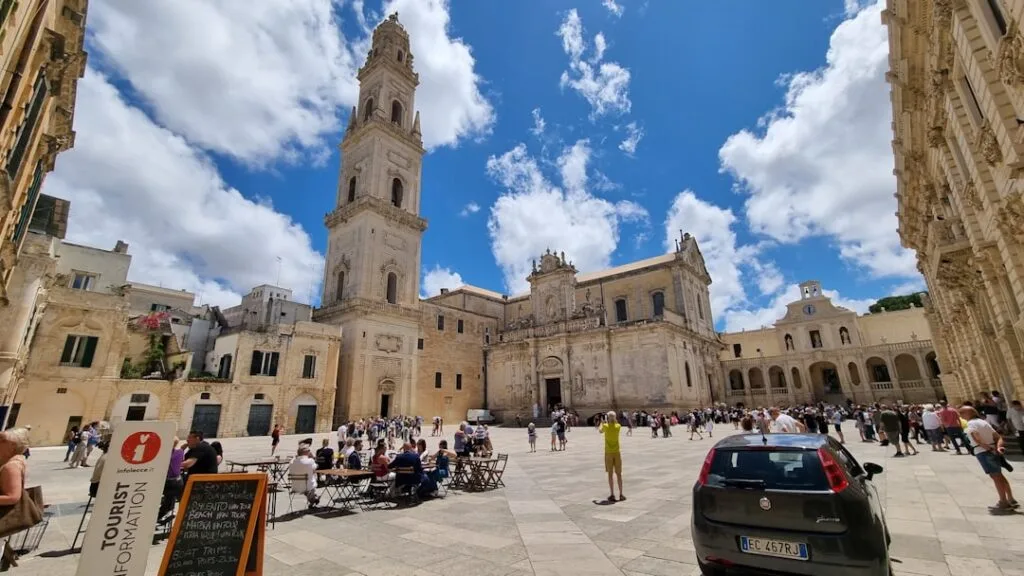
Lecce’s Duomo, officially the Cattedrale di Maria Santissima Assunta, sits on the picturesque Piazza del Duomo, an enclosed space that feels more like a courtyard than a wide urban square. The cathedral blends Romanesque and baroque elements: a restrained baroque facade, a luminous nave and a series of richly decorated chapels. The adjacent bell tower (campanile) offers one of the best views over the city for those willing to make the short climb.
Address: Piazza del Duomo, 1, 73100 Lecce LE, Italy.
Opening hours: 8:00–12:30 and 16:30–19:00 (times may vary during ceremonies or high season).
Price: cathedral entry is free; Duomo museum / bell tower and guided visits cost around €3–€5; climbing the campanile €4–€6.
Immersive description: enter through the small side door and let your eyes adjust to the diffuse light that grazes the stuccoes. The marble flooring, wooden stalls and main altar create a solemn atmosphere. The adjoining cloister and diocesan museum display vestments, sculptures and manuscripts — perfect to understand the Duomo’s role in Lecce’s religious and civic life. The climb up the campanile is worth the effort: you’ll look over tiled roofs and spot the silhouette of the Basilica di Santa Croce.
Practical tips: aim to visit in the morning when the cloister is less crowded; book a guided museum tour to access reserves and precious items not on general display. Be aware of Sunday mass times; dress with shoulders covered out of respect. Stalls near the piazza sell small postcards and guides — handy if you didn’t bring a guidebook.
Click here to discover archaeological and baroque Lecce with an audio guide
3. Chiesa di Sant’Irene — Piazza del Duomo, 73100 Lecce LE, Italy
The Chiesa di Sant’Irene lies within the Duomo complex and is an essential complementary visit: dedicated to Lecce’s patron saint, Sant’Irene, it pairs a simple exterior with an interior rich in baroque stuccoes and frescoes. Its intimate feel invites quiet reflection; the treasure chapel houses relics and liturgical objects of fine craftsmanship.
Address: Piazza del Duomo, 73100 Lecce LE, Italy (access via the Duomo courtyard).
Opening hours: usually 9:00–12:30 and 16:00–19:00 (occasional closures for services).
Price: free to visit; suggested donation €1–€3 for maintenance.
Immersive description: attend a low mass and notice how the stuccoes and gilding respond to candlelight, creating an almost theatrical atmosphere. The painted altarpieces show local saints in deeply emotional scenes, and the apse chapel forms a little marble-and-gold stage. Local artisans worked the pietra leccese subtly here, carving motifs that seem to float off the surface.
Practical tips: Sant’Irene is perfect for a contemplative pause after the Duomo. If you’re interested in sacred objects, ask Duomo museum staff if you can access pieces held in reserve — sometimes available through guided tours. Dress appropriately; discretion is expected. Take advantage of nearby Caffè al Duomo or a local pastry shop for a refreshment.
4. Chiesa di San Matteo — Piazza San Matteo, 73100 Lecce LE, Italy
The Chiesa di San Matteo, on Piazza San Matteo not far from the historic center, is a fascinating example of Lecce’s take on baroque. Its facade, less spectacular than Santa Croce’s, nonetheless reveals decorative finesse and well-proportioned statues. Inside, the space is organized around a central nave with side chapels adorned with marble and stucco.
Address: Piazza San Matteo, 73100 Lecce LE, Italy.
Opening hours: 9:00–12:30 and 15:30–19:00; sometimes closed for local services.
Price: free entry; local guided tours €2–€4.
Immersive description: San Matteo’s dim interior contrasts with the bright urban facades; restored old paintings bring evangelical scenes to life with great emotion. The richly ornamented side altars reflect patronage from local families. Here you feel the closeness between artists and confraternities; every ornament has a story tied to family devotion.
Practical tips: Piazza San Matteo often hosts free concerts in the evenings during summer — check the town’s cultural calendar. If you’re photographing interiors, ask permission during a mass. After your visit, wander the nearby alleys where you’ll find artisan workshops and small ceramic shops.
5. Chiesa di Santa Chiara — Piazzetta Mons. Oronzo Tiso, 73100 Lecce LE, Italy
The Chiesa di Santa Chiara adjoins a convent and is notable for a peaceful cloister and refined decorations. Less frequented by tourist circuits, it offers calm and a delicate decorative palette, where white stucco and subtle gilding converse. The cloister, in particular, is an oasis: arcades, inner gardens and play of light and shadow invite contemplation.
Address: Piazzetta Mons. Oronzo Tiso (near Via Palmieri), 73100 Lecce LE, Italy.
Opening hours: 8:30–12:30 and 15:30–18:30; access may be limited in high season or during religious events.
Price: church entry free; guided visits to the cloister and convent €3–€5.
Immersive description: stepping inside you’re struck by an inner oasis: distant chants, the scent of wax and shadow patterns on the columns. The chapel frescoes, well restored, recount episodes from the life of Saint Clare; the restrained staging intensifies the emotional impact. The cloister is perfect for reading or a discreet photo session, especially in late morning.
Practical tips: Santa Chiara is an excellent choice if you want to avoid crowds. Ask about guided visits to the convent; they often grant access to areas normally closed to the public. Bring water in summer: the cloister’s shade is pleasant but walking around the historic center can be hot.
Click here to book a private walking tour of Lecce

6. Chiesa di Santa Teresa (Chiesa del Convento di Santa Teresa) — Via Giuseppe Libertini, 73100 Lecce LE, Italy
The Chiesa di Santa Teresa is attached to an old convent and represents a more austere but equally moving baroque. Deep plays of light and shadow, gilded altarpieces and statues set in lateral niches create an almost mystical atmosphere. Theresian iconography covers walls and ceilings: mystical scenes and Carmelite symbols abound.
Address: Via Giuseppe Libertini, 73100 Lecce LE, Italy (access via the convent entrance near the street).
Opening hours: 9:00–12:00 and 16:00–19:00; hours may change for religious events.
Price: free entry; voluntary donations recommended for upkeep (€1–€3).
Immersive description: the church unfolds like a small interior theater. Warm-hued baroque paintings seem to vibrate under natural light filtered by upper windows. The pews are worn by generations of worshippers; the smell of wood and wax adds to the sensory experience. Carved details on altar frames show the extraordinary care of local craftsmen.
Practical tips: Santa Teresa is ideal for lovers of intimate sacred art. Check for temporary exhibitions: the convent sometimes hosts cultural events and small classical concerts. If you can, combine the visit with a stroll along Via Libertini where a few artisan shops are located.
Click here to discover Lecce in a 2-hour baroque adventure

7. Chiesa di San Giovanni Battista (Church of St. John the Baptist) — Via Rudiae, 73100 Lecce LE, Italy
The Chiesa di San Giovanni Battista on Via Rudiae presents a baroque marked by structural rigour: sculpted but orderly facades, interiors with clear lines and side chapels showcasing remarkable paintings. The church reflects local devotion to Saint John the Baptist and the attention paid to annual processions: you may sometimes see parts of liturgical machinery and historical costumes.
Address: Via Rudiae, 73100 Lecce LE, Italy.
Opening hours: 9:00–12:30 and 16:00–19:00; closed during certain weekday services.
Price: free entry; guided tours €2–€4.
Immersive description: the interior breathes devotion from the community: ex-votos, plaques of thanks and personal tokens left by locals. Paintings of Saint John the Baptist’s life occupy the altarpieces; note the mastery of chiaroscuro, a legacy of Italian baroque painting. Vaults and arches are adorned with geometric stuccoes that gently rhythm the space.
Practical tips: if you’re interested in local religious festivals, check the date of the procession in honor of Saint John the Baptist (dates vary): it’s a moment when the church becomes the center of a large civic gathering. For photographers, the interior offers interesting compositions with aligned pews and intermittently lit niches.
8. Chiesa del Carmine — Piazza del Carmine, 73100 Lecce LE, Italy
The Chiesa del Carmine, dedicated to Our Lady of Mount Carmel, is a place where baroque mixes with older architectural forms. The church stands out for its sculpted portal, statues of saints and a series of chapels holding painted works and relics. The adjoining cloister and some convent rooms have been converted into exhibition spaces, often adding cultural value to a religious visit.
Address: Piazza del Carmine, 73100 Lecce LE, Italy.
Opening hours: 8:30–12:30 and 16:00–19:00 (times may vary for events).
Price: free entry; temporary exhibitions paid (€3–€6).
Immersive description: the visit often starts at the sculpted portal: effigies and Carmelite symbols introduce the visitor. Inside, the main altar is framed by columns and cherubs, and soft light filters through high windows. The monastic atmosphere remains, especially in the annex rooms: tiled corridors, frescoes emerging beneath the surface and antique furniture.
Practical tips: Piazza del Carmine is a pleasant spot for a coffee break; it’s quieter than the main tourist zones. Look for signs announcing temporary exhibitions: they often feature restored relics or sacred art. If you like themed tours, some guided walks combine Carmine with nearby churches into a two-hour stroll.
Click here to book the Lecce walking tour
9. Chiesa di San Francesco della Scarpa — Via Giuseppe Palmieri, 73100 Lecce LE, Italy
The Chiesa di San Francesco della Scarpa, less known but full of charm, sits on a historic street and features elegant interior decorations, finely worked side altars and patinated paintings. The church’s local history is tied to confraternities and charitable traditions, which still surface in community practices today.
Address: Via Giuseppe Palmieri, 73100 Lecce LE, Italy.
Opening hours: 9:00–12:00 and 16:00–18:30; sometimes closed for private services.
Price: free access; guided tours on request €2–€4.
Immersive description: a scent of incense sometimes lingers in the air, especially during religious celebrations. Gilded wooden altarpieces, chapel gildings and old paintings convey a sense of historical continuity; you can sense the hands of different artists working across centuries. The acoustics are excellent for small baroque music concerts — check the cultural calendar.
Practical tips: San Francesco della Scarpa is a great starting point for a stroll through the historic district. After the visit, head to nearby artisan workshops just a few minutes away on foot. In summer, look out for intimate concerts often hosted in the church or neighbouring cloister.
Click here to join a photographic tour of Lecce
10. Chiesa del Rosario (Chiesa di Santa Maria del Rosario) — Piazza Santa Maria del Rosario, 73100 Lecce LE, Italy
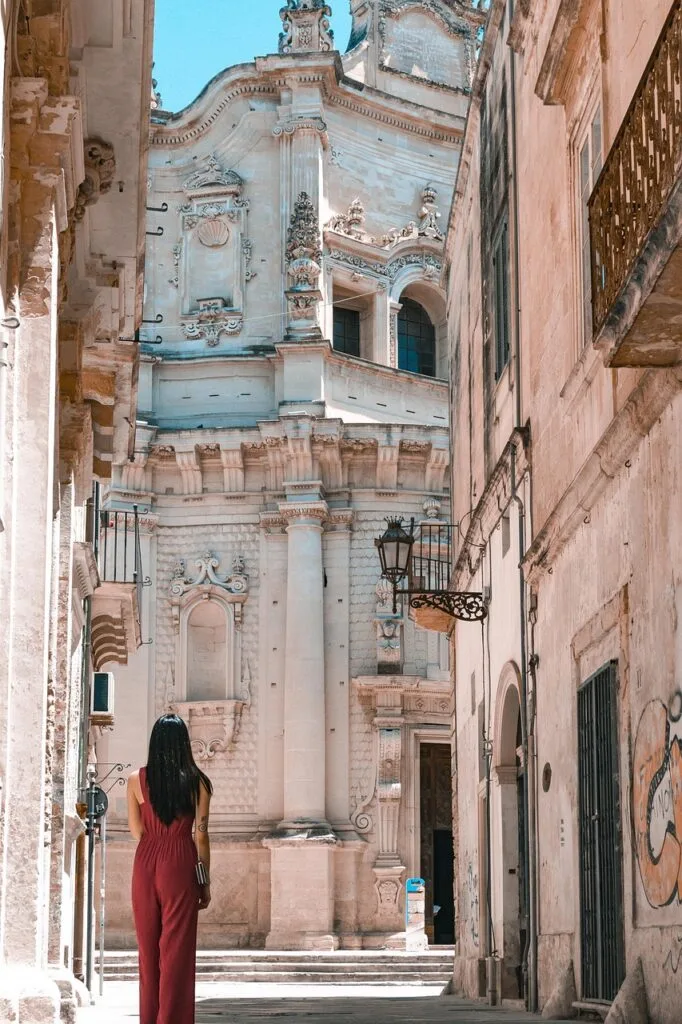
The Chiesa del Rosario, dedicated to Our Lady of the Rosary, is a fine example of popular piety shaped in baroque form: confraternity chapels, richly decorated altars and iconography focused on the Virgin and the Rosary. The facade shows sculpted elements while the interior reveals narrative paintings, finely carved statues and sometimes popular ex-votos that tell local stories.
Address: Piazza Santa Maria del Rosario, 73100 Lecce LE, Italy.
Opening hours: 9:00–12:30 and 16:00–19:00; hours may vary during religious festivals.
Price: free access; exhibitions or guided visits €2–€5.
Immersive description: the church often hosts devotional gatherings and processions, especially around October (the month of the Rosary). The paintings form a visual narrative that guides the faithful through the joyful, sorrowful and glorious mysteries. Gilding, marble and volutes combine to create a very expressive sacred scenography.
Practical tips: for those interested in religious ethnography, Chiesa del Rosario is a privileged observation point: ex-votos, event posters and confraternity objects reveal local life to the curious eye. If you want to attend a procession, ask local staff for exact dates: the town usually publishes a schedule during the high season.
CONCLUSION
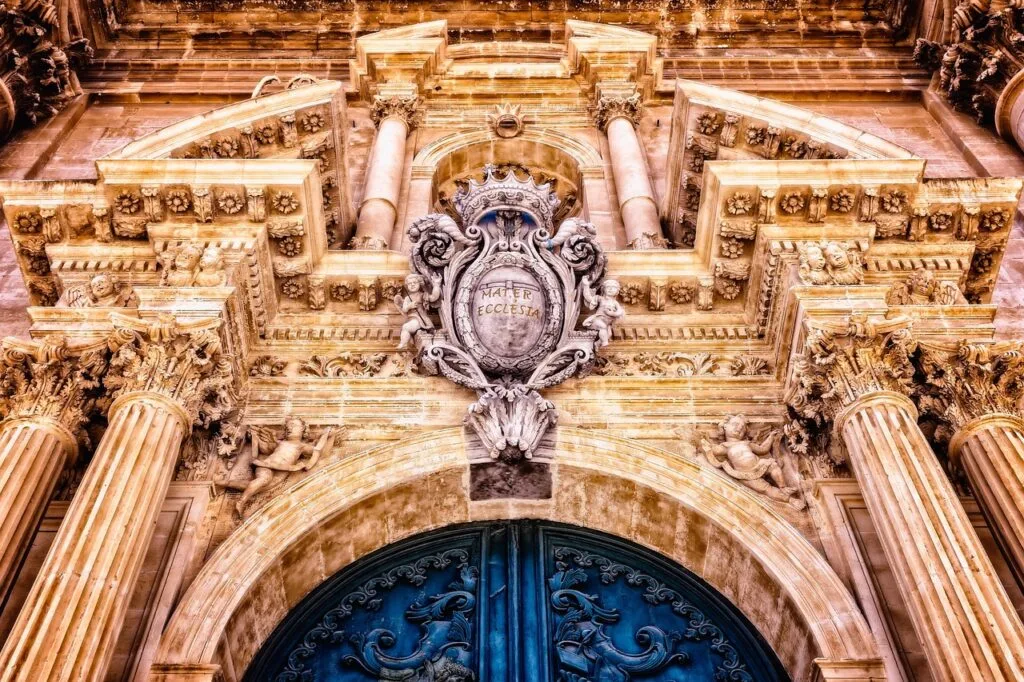
Lecce unfolds as an open-air museum where the local stone, worked with rare virtuosity, gives rise to a baroque that is both theatrical and intimate. The ten churches presented here offer a complete route through the most significant expressions of Lecce baroque: from the near-opulent flamboyance of the Basilica di Santa Croce to the silent interiority of Santa Chiara and Santa Teresa. Each of these churches tells a different story — of patron families, local confraternities, craftsmen and communities that shaped Lecce’s religious and social identity.
Practically, these visits can be organized into themed circuits (the centre’s must-sees, convents and cloisters, confraternity churches) or independent walks at your own pace. Many sites are free to enter, but it’s wise to budget a few euros for attached museums, specialised guided tours or audio guides — small investments that deepen your understanding of decoration, restoration techniques and historical context. Also, respecting service times and dress codes helps avoid awkward moments and allows you to observe local practices in peace.
Click here to buy the City Pass to visit Lecce easily
Photographers and art lovers will find in Lecce an exceptional playground: carved facades at sunrise, golden interiors at dusk, sculpted details to study up close. Travel journals will benefit from pairing these visits with culinary breaks: traditional cafés, local pasticcerie and restaurants that showcase Puglian produce. Ultimately, the best way to appreciate Lecce may be to take your time — sit on a step, listen to the bells, and let the stone tell its centuries. These ten baroque churches form a rich and complementary route that reveals the beauty and depth of a city that, over the centuries, turned faith into art.
Final tips: allow at least a half-day for the Duomo and Santa Croce, a morning to link several small churches in the center, and an afternoon to explore convents and cloisters. Check Lecce’s tourist office for updated opening times and themed guided tours. And above all, be ready to be surprised: Lecce is as much lived as it is visited.